

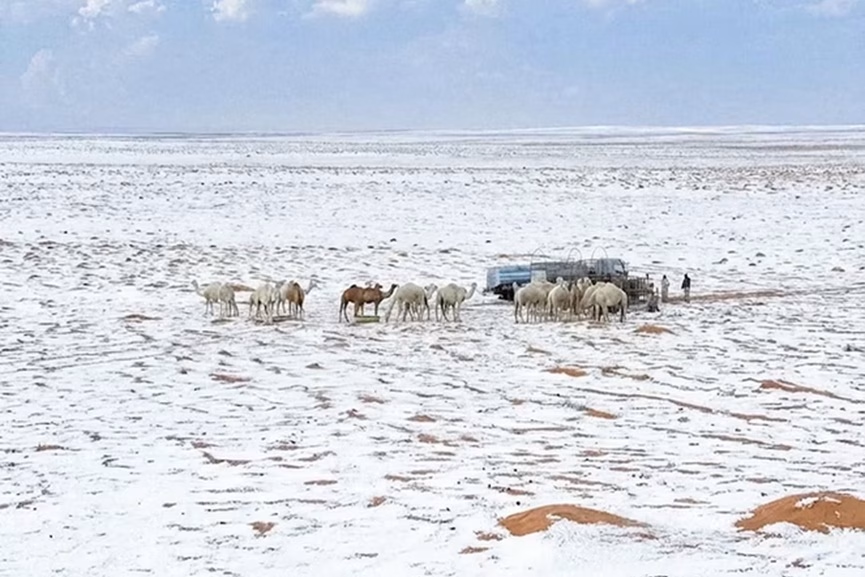
Riyadh: Saudi Arabia, a country better known for desert heat, was hit by an unusual winter spell this week as snowfall, widespread rain and sharply colder temperatures swept across several regions, surprising residents and raising fresh questions about shifting weather patterns.
Snow fell across parts of northern Saudi Arabia, transforming normally barren landscapes into scenes more typical of alpine regions. In Tabuk Province, the mountains around Jebel Al-Lawz were covered in snow, including Trojena, a high-altitude area sitting about 2,600 metres above sea level. Light rain accompanied the snowfall, while temperatures in some areas dropped below freezing during the early morning hours.
Snow was also recorded in parts of the Hail Region, including areas near Hail city, an exceptionally rare event in the arid Middle East. The cold conditions allowed snow to settle on higher ground and open terrain, drawing attention from across the country.
Rainfall extended far beyond the northern regions. Light to moderate rain fell over Bir Bin Hermas, Al-Ayinah, Ammar, AlUla Governorate, and Shaqra, while heavier downpours were reported in Riyadh, Qassim, and the Eastern Region. The National Centre for Meteorology confirmed snowfall in Al-Majmaah and Al-Ghat, north of Riyadh, where snow accumulated in open areas and elevated locations.
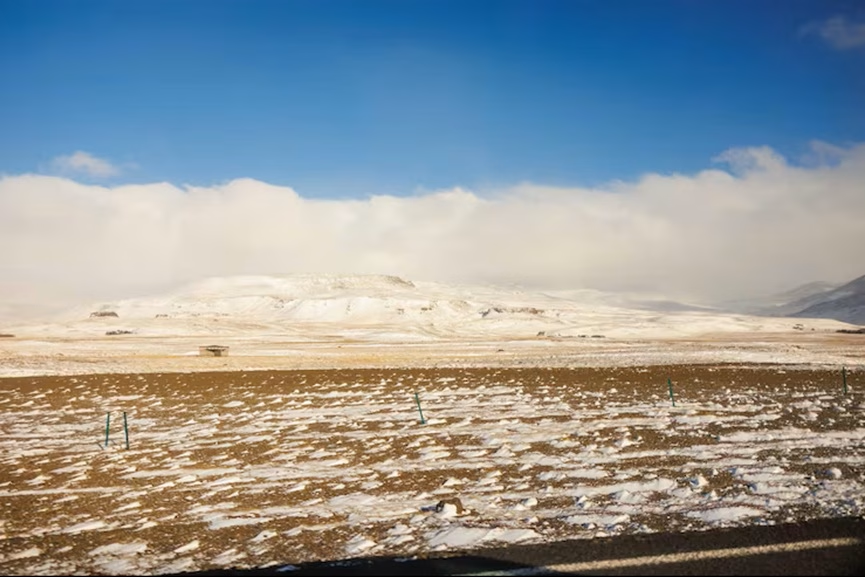
Meteorologists said the weather was caused by a strong cold front interacting with rain-bearing cloud systems, bringing unseasonably cold air into central and northern parts of the country. Authorities warned that low temperatures would persist in the coming days and urged residents to drive carefully and avoid flood-prone valleys.
Images of snow-covered hills and fields spread quickly on social media, prompting large crowds to travel to Al-Majmaah and Al-Ghat to witness the rare sight. As a precaution, schools in Riyadh shifted to remote learning due to the weather conditions.
While the snowfall was triggered by specific atmospheric conditions, weather experts note that such unusual events are becoming more frequent. The Saudi snowfall follows a growing list of global weather anomalies, from unexpected rain in the Gulf to extreme heat in South Asia and flooding in regions unaccustomed to heavy rainfall.
Together, these events underline how weather patterns are becoming less predictable, even in regions long considered climatically stable.