
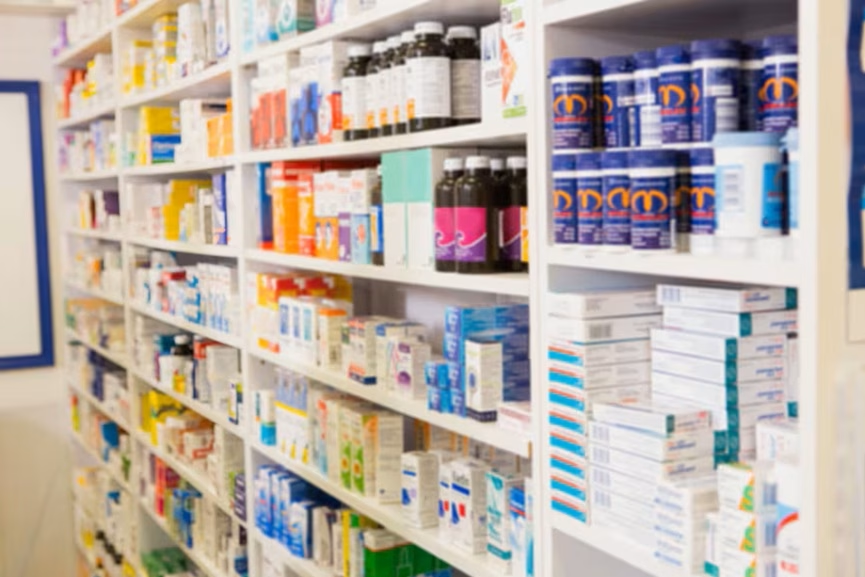
London: The United States and the United Kingdom have reached a historic pharmaceutical trade deal that will keep tariffs on UK-made medicines entering the US at zero for the next three years.
Under the agreement, the NHS will spend 25 percent more on new medicines over the next three years, and the overall allocation for drugs is set to rise from 0.3 percent of GDP to 0.6 percent over the next decade. The deal also caps the rebate drug companies must pay back to the NHS at 15 percent from 2026, down from over 20 percent last year, providing financial certainty for both the health service and the pharmaceutical sector.
The arrangement follows years of pressure from the US over high medicine prices abroad. US President Donald Trump repeatedly threatened to impose tariffs of up to 100 percent on branded drug imports, citing concerns that US consumers subsidise medicines for other developed countries. In return, UK pharmaceuticals, drug ingredients, and medical technology will remain exempt from existing and potential US tariffs under Section 232 and Section 301 rules.
Business and Trade Secretary Peter Kyle called the agreement a major win for the UK, stating that it, “guarantees that UK pharmaceutical exports – worth at least £5 billion a year – will enter the US tariff-free, protecting jobs, boosting investment and paving the way for the UK to become a global hub for life sciences.” Last year, the UK exported £11.1 billion worth of medicines to the US, accounting for 17.4 percent of total UK goods exports.
NEW: UK-US pharmaceuticals deal 🇬🇧 🇺🇸
A landmark agreement to:
💊 Safeguard access to medicines
💸 Drive life sciences investment
🥼 Secure thousands of jobsWith 0% tariffs on UK medicines exported to the US, we’re delivering for patients and businesses nationwide. pic.twitter.com/8ioEhbYF0x
— Department for Science, Innovation and Technology (@SciTechgovuk) December 1, 2025
The deal also involves reforms to how new drugs are evaluated. The National Institute for Health and Care Excellence (NICE), which determines whether treatments are cost-effective for the NHS, will adjust its pricing thresholds to reflect the higher spending, likely enabling three to five additional medicines to be approved each year. Currently, NICE reviews around 70 drugs annually, approving roughly 90 percent.
Bristol Myers Squibb said it plans to invest more than $500 million over the next five years in UK research, development, and manufacturing. Earlier, other major firms including GSK and AstraZeneca had shifted investments to the US amid uncertainties over tariffs and pricing rules. GSK announced plans to invest $30 billion in US facilities, while AstraZeneca paused a £200 million UK expansion and focused $50 billion on US operations.
US officials called the agreement a step toward fairer global pharmaceutical pricing. White House Health Secretary Robert Kennedy Jr said Americans should not continue to bear the world’s highest drug costs for medicines funded in part by US taxpayers, while White House spokesperson Kush Desai described the deal as a “historic step” ensuring other countries pay their fair share.
UK Health Secretary Wes Streeting acknowledged the importance of controlling costs but said the deal strikes a balance between fair pricing for the NHS and encouraging innovation. British Science Minister Liz Kendall said it will allow UK patients to access cutting-edge medicines sooner and ensure life sciences companies continue investing in the country.