
Geneva: A landmark United Nations treaty aimed at safeguarding marine life in international waters is set to enter into force on Saturday. The move marks a major step in global ocean conservation after 81 countries completed the process of writing the agreement into their national laws.
Since its adoption in June 2023, the High Seas Treaty has been signed by 148 countries, representing more than three-quarters of UN member states. Among those that have fully ratified it are island nations such as Palau, Cuba, and the Maldives, along with major economies including China, Germany, Japan, France, and Brazil.
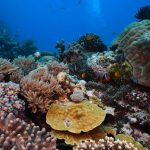
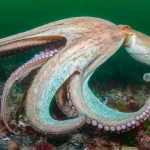
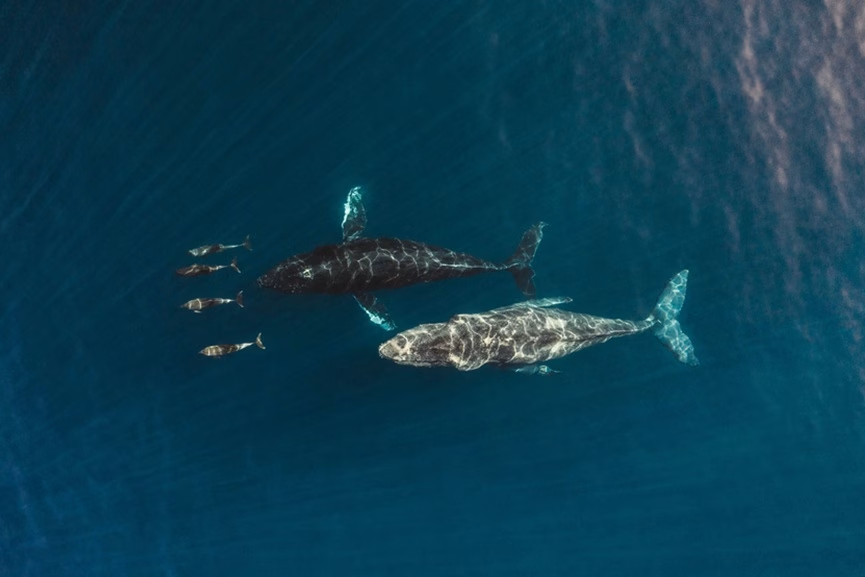
Formally known as the Agreement on the Conservation and Sustainable Use of Marine Biological Diversity of Areas beyond National Jurisdiction, the treaty applies to waters that lie outside national control. These areas cover around two-thirds of the world’s oceans and are home to an estimated 10 million species, many of which remain unknown to science.
Supporters say the treaty fills a long-standing gap in international law by creating binding rules to protect ecosystems that have until now been largely unregulated. It provides a framework for establishing marine protected areas, assessing environmental impacts of human activity, sharing the benefits of marine genetic resources more fairly, and strengthening scientific cooperation.
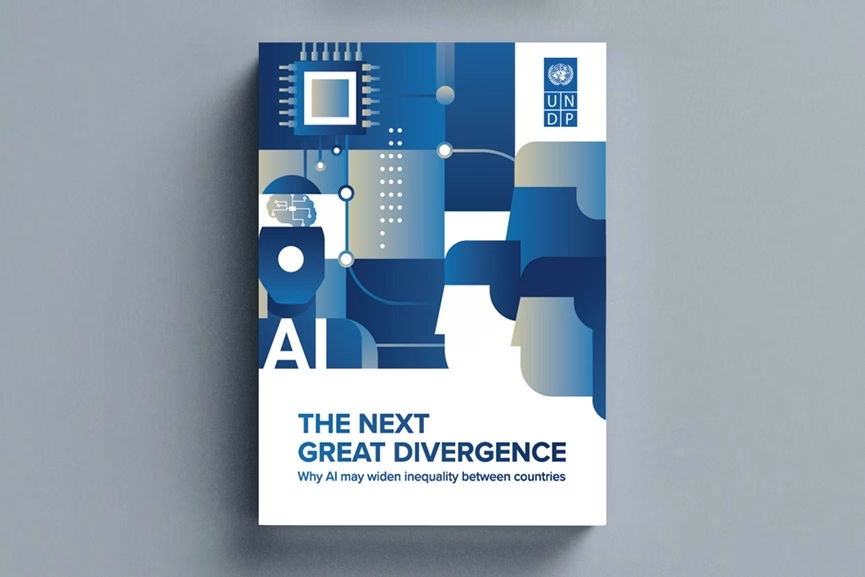
🎉The #HighSeasTreaty will enter into force on 17 January 2026 – a landmark achievement for global ocean protection and multilateral cooperation.
Join the @HighSeasAllianc and be part of this historic moment!
📅19 Jan 2026
⏰9-10.30 ESThttps://t.co/FG8M9xDCbS#60toGlobal pic.twitter.com/9d06il8aVA— UNDP Planet (@UNDPplanet) January 16, 2026
Conservation groups have welcomed the agreement as a breakthrough for ocean governance. Advocates say the high seas play a critical role in regulating the planet’s climate, sustaining fisheries, and supporting migratory species that travel vast distances across the open ocean.
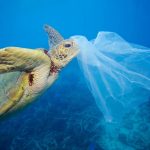
Rising temperatures, acidification, and plastic waste are already reshaping marine ecosystems, while interest in activities such as deep-sea mining and expanded offshore drilling has raised new concerns among scientists and environmentalists.
Despite the broad support, several major countries have yet to ratify the agreement. The United States, India, the United Kingdom, and Russia have signed the treaty but have not incorporated it into domestic law, meaning they are not legally bound by its provisions. Signatories that have not ratified are expected to avoid actions that would undermine the treaty’s objectives.
In the United States, the treaty’s future remains uncertain. President Donald Trump has announced plans to withdraw from a range of UN bodies and international agreements, while also moving to accelerate deep-sea mining and expand offshore oil drilling. Although the High Seas Treaty was not included in a recent list of organisations the US intends to exit, his administration has rolled back several international environmental commitments. UN officials have urged remaining governments to complete ratification, warning that delays could weaken global efforts to protect the oceans.