
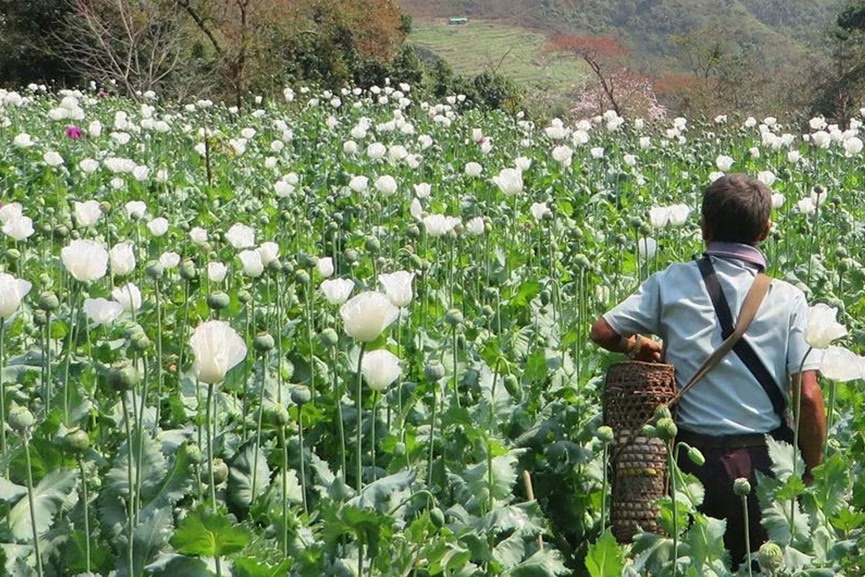
Myanmar: Opium poppy cultivation in Myanmar has reached a decade-long peak, with the area of land growing the crop increasing across all regions, the United Nations has said.
According to the latest Myanmar Opium Survey by the UN Office on Drugs and Crime (UNODC), cultivation rose 17 percent from 45,200 hectares in 2024 to 53,100 hectares in 2025. The report noted that Myanmar remains the world’s main source of illicit opium, especially as cultivation in Afghanistan continues to decline.
Delphine Schantz, UNODC’s representative for Southeast Asia and the Pacific, said the expansion shows how the opium economy has re-established itself in recent years and could continue to grow. She highlighted that while the area under cultivation increased significantly, opium production per hectare has not kept pace.
New report out now!
The #Myanmar Opium Survey 2025 shows a 17% increase in poppy cultivation compared to the previous year.#Opium production continues to grow and has reached a ten-year high.
Read the full report here: https://t.co/OQ9ensS8Vo pic.twitter.com/vTptwukxT2
— UNODC Southeast Asia-Pacific (@UNODC_SEAP) December 3, 2025
The UNODC attributed this gap to growing instability in the country, where intensifying conflict and insecurity make it harder for farmers to maintain their crops and achieve high yields. Rising opium prices have also driven farmers toward cultivation. Since 2019, the price of 1 kilogram of fresh opium in Myanmar has risen from $145 to $329.
The report warned of emerging signs that heroin from Myanmar is reaching international markets that were previously supplied by Afghanistan. Some 60 kilograms of heroin believed to have originated in and around Myanmar were seized from airline passengers traveling to the European Union in 2024 and early 2025.
Schantz said farmers are increasingly drawn to poppy cultivation due to conflict, economic pressures, and rising prices. She added that the growth in opium farming will have significant implications for Myanmar’s future and could influence drug markets across the region and beyond, calling for urgent action to address the situation.