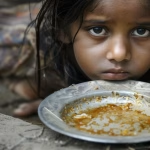

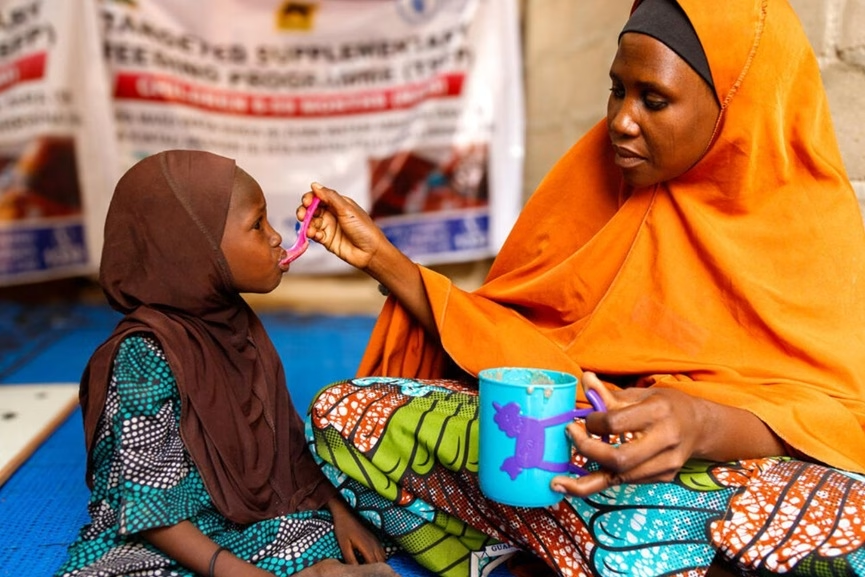
US: The United States has announced a $2 billion humanitarian assistance package aimed at supporting tens of millions of people facing hunger, disease, and displacement across more than a dozen countries next year. The pledge comes at a time when global aid agencies are struggling with severe funding shortages following deep cuts by major donor nations.
The assistance will be delivered through a newly agreed framework with the United Nations, designed to improve efficiency, strengthen oversight, and ensure that life-saving aid reaches the most vulnerable populations. The UN Office for the Coordination of Humanitarian Affairs will oversee the funding, working closely with the US State Department.
The announcement follows a sharp reduction in US foreign aid spending this year, alongside similar cutbacks by other Western donors, including Germany, as governments divert resources toward defence and security priorities. These reductions have placed unprecedented strain on the UN’s humanitarian operations.
According to UN data, total US humanitarian contributions fell to around $3.38 billion in 2025, accounting for less than 15 percent of global funding. This marked a steep decline from more than $14 billion the previous year and a peak of $17.2 billion in 2022.
The United States remains the most generous nation in the world for lifesaving humanitarian assistance—but under @POTUS’s leadership taxpayer dollars will never fund waste, anti-Americanism, or inefficiency. Today, the @StateDept and United Nations signed an agreement that…
— Secretary Marco Rubio (@SecRubio) December 29, 2025
Under the new mechanism, the United States and the United Nations will sign 17 separate agreements with countries identified as priority recipients. These include Ukraine, the Democratic Republic of Congo, Nigeria, and Sudan, all of which are grappling with ongoing conflict, displacement, and food insecurity. Additional countries may be added as more funds are mobilised.
However, several major crisis zones will not receive US funding under this framework. Yemen, Afghanistan, and Gaza have been excluded, with UN officials indicating that alternative sources of support will be sought to address urgent needs in those areas.
Gaza will be handled separately, following US approval of more than $300 million after efforts to support a ceasefire and facilitate aid delivery. The US has indicated it will work with other donors to establish a pooled funding mechanism specifically for Gaza in the next phase of assistance.
The funding will focus strictly on emergency, life-saving aid, with projects related to climate initiatives and other non-priority areas excluded under the current approach.
Earlier this month, the United Nations launched its 2026 global humanitarian appeal, seeking $23 billion to assist 87 million people worldwide. While the figure is significantly lower than last year’s request, it reflects the reality of shrinking donor support even as humanitarian needs continue to rise.