
Washington: The administration of US President Donald Trump is suspending the processing of immigrant visas for applicants from 75 countries, intensifying a broad immigration crackdown that has expanded well beyond efforts to curb illegal entry.
The suspension will take effect on January 21 and applies to immigrant visa applicants from a wide range of countries across Latin America, South Asia, Africa, the Middle East, the Balkans, and the Caribbean.
Among those affected are Brazil, Colombia, and Uruguay in Latin America; Pakistan and Bangladesh in South Asia; Bosnia and Albania in the Balkans; and dozens of nations across Africa and the Middle East.
A State Department spokesperson stated that the move follows a comprehensive internal review of immigration policies aimed at strengthening screening and vetting standards for all prospective immigrants. A diplomatic cable sent to US missions worldwide said officials had identified concerns that applicants from the affected countries were at higher risk of relying on public assistance once in the United States.
The guidance instructs consular officers to refuse immigrant visas that have been approved for printing but not yet issued, as well as those already printed but still held within consular offices. The pause does not apply to visitor visas, which remain unaffected even as the United States prepares to host the 2026 football World Cup and the 2028 Summer Olympics.
The State Department will pause immigrant visa processing from 75 countries whose migrants take welfare from the American people at unacceptable rates. The freeze will remain active until the U.S. can ensure that new immigrants will not extract wealth from the American people.
— Department of State (@StateDept) January 14, 2026
The decision builds on a directive issued in November that urged US diplomats to ensure immigrant applicants demonstrate financial independence and pose no risk of becoming dependent on government benefits. State Department officials said existing legal authority allows visa officers to deny entry to individuals deemed likely to become a public charge.
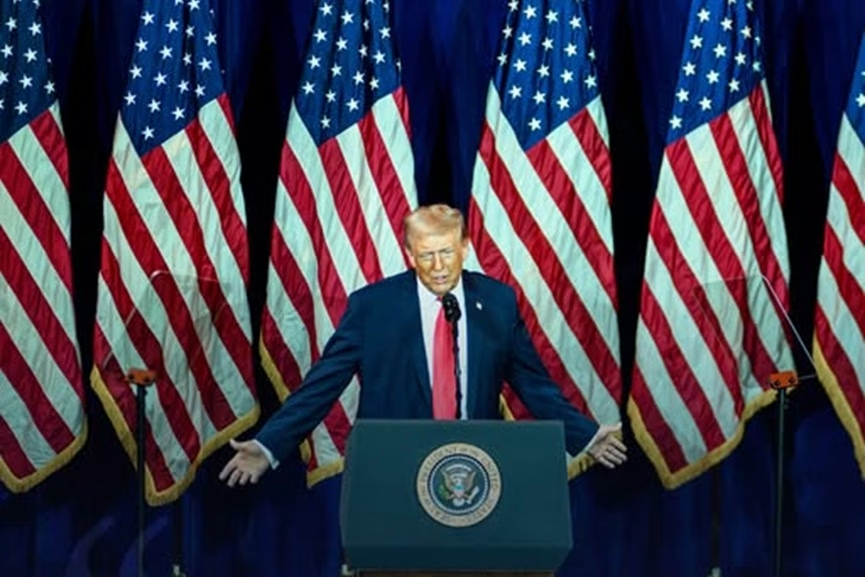
Since returning to the office in January, Trump has launched an aggressive immigration enforcement campaign, deploying federal agents to major cities and tightening oversight across the visa system. While much of his campaign rhetoric focused on illegal immigration, legal immigration pathways have also been narrowed through higher fees, stricter eligibility rules, and expanded screening, including social media reviews.
The visa suspension could significantly reduce lawful immigration levels. The policy is expected to block nearly half of all potential legal immigrants to the United States, potentially affecting more than 300,000 applicants over the next year.
The State Department said it has already revoked more than 100,000 visas since Trump took office, reflecting a tougher stance across both immigrant and non-immigrant categories.
Trump has defended his approach as necessary after years of elevated illegal border crossings under his predecessor, former President Joe Biden. In November, he pledged to permanently halt migration from what he described as Third World countries following a fatal shooting near the White House involving an Afghan national.
The list of affected countries includes Afghanistan, Bangladesh, Brazil, Pakistan, Nigeria, Haiti, Iran, Iraq, Russia, Sudan, Syria, Yemen and dozens of others across multiple regions.