
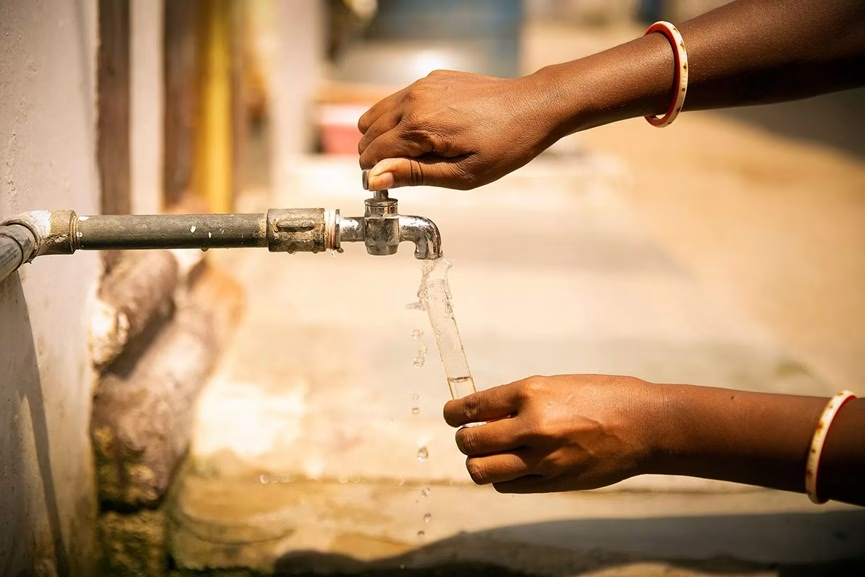
Indore: Sewage-contaminated drinking water has been blamed for killing at least 10 people, including a five-month-old baby, and sending more than 270 others to the hospital in Indore, a city repeatedly ranked as India’s cleanest over the past eight years.
The outbreak has hit a densely populated, lower-income neighbourhood in Bhagirathpura, where residents say they had been complaining for months about foul-smelling tap water. Despite repeated warnings, no action was taken until people began falling seriously ill.
The Indore mayor confirmed that the deaths were linked to a diarrhoea outbreak caused by contaminated water, saying sewage had mixed into the main water supply line connected to a local tank. While officials put the death toll at 10, local media reports suggested the number could be higher, though this has not been officially confirmed.
Hospitals across the city have been overwhelmed, with at least 32 patients currently in intensive care. Health teams conducting door-to-door checks identified more than 2,400 suspected cases and provided immediate treatment where possible to prevent further deterioration.
Investigations indicate that sewage entered the drinking water pipeline through a public toilet constructed directly above it. Authorities said the toilet had been built without a septic tank, allowing waste to seep into the supply over time.
Residents began arriving at hospitals earlier this week with symptoms including vomiting, diarrhoea, and high fever. Water samples later confirmed the presence of bacteria typically found in sewage and human waste.

Residents said their complaints were repeatedly passed between departments without resolution, leaving the problem to worsen. An Indore municipal councillor described the incident as a clear case of serious negligence, prompting the suspension of several municipal officials pending an inquiry.
The death of the infant has drawn particular outrage. The child had been bottle-fed using tap water that the family believed was safe after filtering. His father said there had been no warning from authorities, despite the same water flowing throughout the neighbourhood.
The incident has also sparked a wider debate on water safety in India. A national newspaper described the tragedy as a wake-up call for water management, warning that environmental failures are increasingly endangering public health.
Opposition leaders accused the state government of negligence, arguing that access to clean drinking water is a basic right. The Madhya Pradesh government said new regulations would be introduced to prevent similar incidents and promised strict accountability.
The Indore crisis has reignited concerns over water testing standards across the country. Reports show that many public water-testing laboratories still lack proper accreditation, raising fears that growing urban populations could face more such outbreaks if oversight does not improve.