
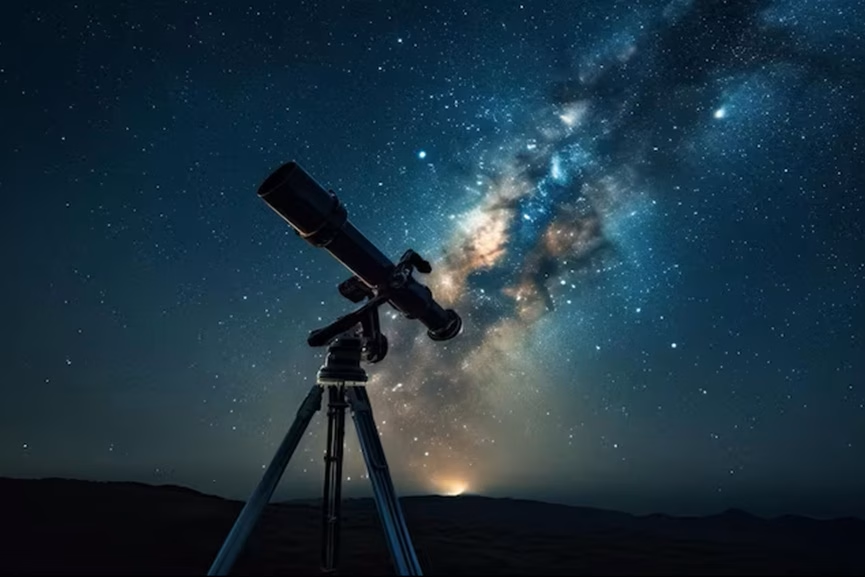
New Delhi: The year 2026 promises to be one of the most exciting years in recent times for skywatchers and astronomy enthusiasts, with a long list of celestial events ranging from eclipses and meteor showers to rare planetary alignments and close encounters in the night sky.
The year opened with a spectacular display as the Quadrantid Meteor Shower peaked in early January, lighting up skies across the Northern Hemisphere. Observers in India also witnessed the event in the pre-dawn hours of January 4, with more than 100 meteors an hour visible under clear conditions.
On January 10, Jupiter will reach opposition, placing the solar system’s largest planet directly opposite the Sun in Earth’s sky. This alignment makes Jupiter visible throughout the night at its brightest, shining strongly in the constellation Gemini and rising high above the horizon for observers in the Northern Hemisphere.
February will feature an annular solar eclipse on February 17. While the full ring-shaped eclipse will be visible from Antarctica, a partial solar eclipse will be seen across parts of Africa, South America, and wide stretches of the Pacific, Atlantic, and Indian Oceans.
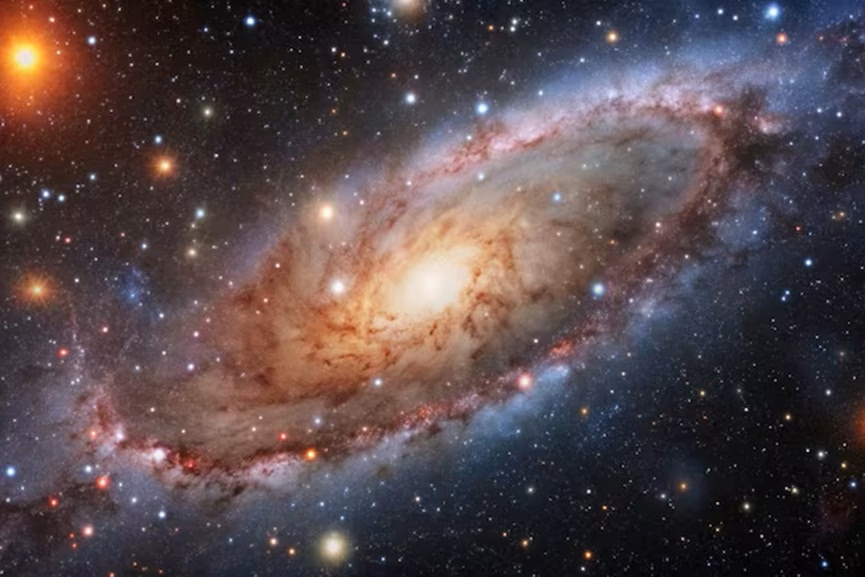
Later in the month, on February 28, six planets will appear aligned in the night sky. Venus, Mercury, and Saturn will be visible to the naked eye shortly after sunset, forming a tight grouping low in the western sky.
March will bring one of the year’s most dramatic events. A total lunar eclipse on March 3 will turn the Moon a deep red for nearly an hour, creating a classic blood moon visible across western North America, East Asia, Australia, New Zealand, and much of the Pacific region. This will be the last total lunar eclipse until 2029. Days later, on March 8, Venus and Saturn will appear within about one degree of each other, creating a striking conjunction easily visible after sunset.
Meteor activity returns in April with the Lyrid Meteor Shower peaking on the night of April 21 to 22. Under dark skies, observers may see up to 18 meteors an hour. With the Moon setting before peak activity, viewing conditions are expected to be favourable, particularly in the Northern Hemisphere.
May will offer a rarer lunar event. On May 31, a full blue micro-moon will occur as the Moon reaches its full phase twice in the same month while also being near its farthest point from Earth. This combination will make the Moon appear slightly smaller and dimmer than usual.
In early June, Venus and Jupiter will put on another impressive show. On the evenings of June 8 and 9, the two brightest planets will appear just over one degree apart above the western horizon, making them easy to spot shortly after sunset.
Late July will bring extended meteor activity with the Southern Delta Aquariid Meteor Shower peaking on July 30 and 31. The shower will be particularly notable in 2026 as it overlaps with the Alpha Capricornids, creating a rare double meteor display. While best viewed from the Southern Hemisphere, observers in the tropics and parts of India may also catch the show.
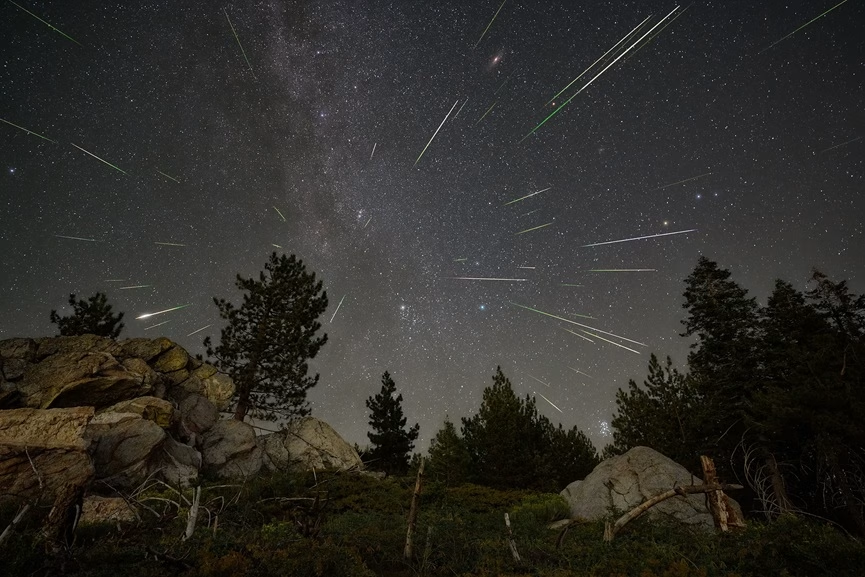
August will be a standout month for skywatchers. On August 12, a total solar eclipse will sweep across mainland Europe, the first such event visible there since 1999. On the same night and into August 13, the Perseid Meteor Shower will peak under new moon conditions, allowing dark skies and the possibility of seeing up to 90 meteors an hour from remote locations.
September will bring a quieter but visually pleasing event on September 8, when the partially illuminated Moon passes close to the Beehive Cluster in the constellation Cancer. The pairing will be visible to the naked eye and especially striking through binoculars.
October’s highlight will be the Orionid Meteor Shower, peaking on October 21. Although moonlight may limit visibility, the shower will still be observable from both hemispheres, especially in the early morning hours.
In November, Uranus will reach opposition on November 25, becoming brighter and easier to locate with binoculars or a small telescope under dark skies.
The year will conclude with the Ursid Meteor Shower peaking between December 22 and 23. While a modest shower, it offers a fitting final display to close a year filled with celestial spectacles.