
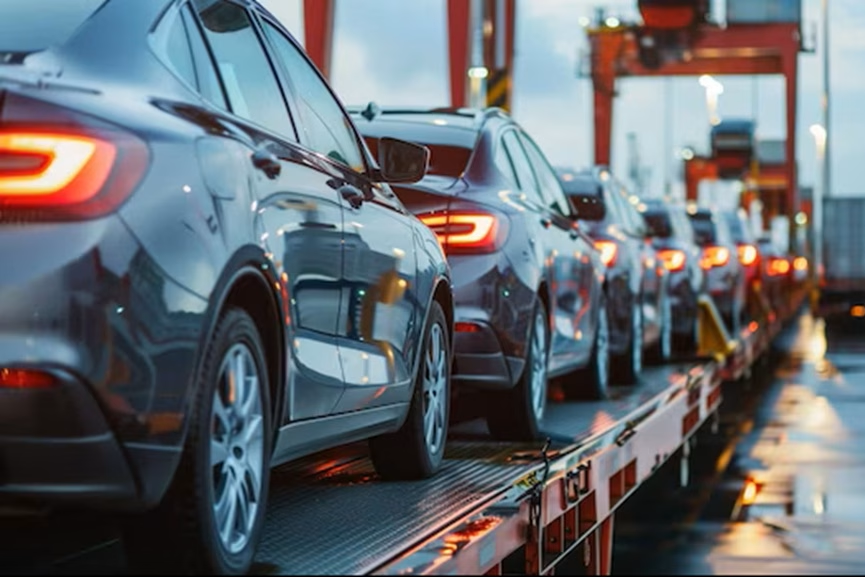
Washington/Brussels: Trade tensions between the United States and the European Union have flared again after Donald Trump announced a steep hike in tariffs on European cars and trucks, raising them to 25 percent.
The move marks a sharp escalation in a fragile transatlantic relationship that had only recently seen signs of stabilizing. Trump claimed the EU had failed to honor commitments under a previously agreed trade framework, though he stopped short of specifying the alleged violations.
EU Pushes Back, Seeks Clarity
The European Commission responded cautiously but firmly, stating that the bloc remains compliant with the agreement while requesting further clarification from Washington. Officials also signaled readiness to defend European economic interests if necessary.
By targeting automobiles, the US has struck at the heart of Europe’s industrial base. The auto sector is a cornerstone of major EU economies, particularly Germany and France, making the tariff hike both economically and politically sensitive.
The decision comes less than a year after a bilateral deal, negotiated during a high-profile meeting in Scotland, set tariffs on most EU goods at 15 percent, averting an earlier threat of even steeper levies.
That agreement had offered temporary relief, with Europe pledging increased investment in the US and measures to boost American exports.
“I will be increasing Tariffs charged to the European Union for Cars and Trucks coming into the United States. The Tariff will be increased to 25%. It is fully understood and agreed that, if they produce Cars and Trucks in U.S.A. Plants, there will be NO TARIFF.” – President… pic.twitter.com/7vC3Nh7iPD
— The White House (@WhiteHouse) May 1, 2026
Strains Beneath the Surface
Despite the deal, underlying tensions never fully eased. Disputes over steel and aluminum tariffs persisted, while geopolitical friction, including US rhetoric over Greenland, further complicated relations.
The European Parliament had briefly delayed ratifying the agreement earlier this year, introducing safeguards that allow suspension if either side undermines its terms. Though eventually approved, trust between the two sides has remained fragile.
Trump used the announcement to renew pressure on European automakers to shift production to the United States. Vehicles manufactured within the US would face no tariffs, an incentive aimed at boosting domestic manufacturing.
Trade experts caution that while the announcement is significant, its legal and practical implications remain unclear.