
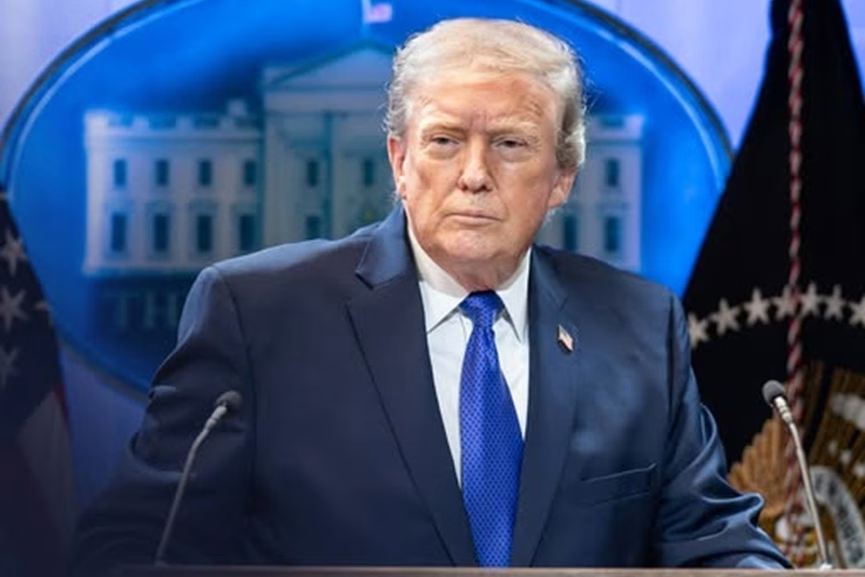
US: The United States and Iran have agreed to a two-week ceasefire, just two hours before President Donald Trump’s deadline for Tehran to reopen the Strait of Hormuz.
Trump had warned that failure to comply could result in the ‘wiping out of a whole civilization.’ The ceasefire was announced late Tuesday, following intense mediation by Pakistan’s military chief, Field Marshal Asim Munir, and Prime Minister Shehbaz Sharif.
Sharif confirmed that both Iranian and US delegations are expected to meet in Islamabad on Friday to continue negotiations.
Under the deal, Iran agreed to pause its blockade of oil and gas shipments through the strait, which handles about one-fifth of global oil exports.
Iranian Foreign Minister Abbas Araqchi said Tehran would halt counterattacks and allow safe passage through the waterway if assaults against it stop.
Israel welcomed the suspension of strikes on Iran, though the ceasefire does not cover Lebanon, where Israeli attacks have continued.
Lebanese authorities reported artillery shelling and an airstrike near a hospital in southern Lebanon that killed four people, with additional strikes causing injuries in several towns.
Trump hailed the agreement as a ‘total and complete victory,’ stating that the ceasefire represented progress toward a long-term peace deal in the Middle East. Iran, meanwhile, framed the deal as a win, claiming Washington had accepted its conditions to end hostilities.
The conflict, now in its sixth week, has claimed over 5,000 lives across nearly a dozen countries, including more than 1,600 civilians in Iran. Analysts cautioned that the two-week ceasefire could be a ‘trust-building exercise,’ with concerns that it might not hold.
The ceasefire is contingent on Iran reopening the Strait of Hormuz. In the meantime, Israeli media reported missile launches from Iran, and explosions were heard in Tel Aviv.
Gulf countries, including Kuwait, Bahrain, Saudi Arabia, and the UAE, activated air defenses amid heightened tensions.
Global leaders also welcomed the ceasefire, citing its potential to reduce the human and economic toll of the ongoing conflict.
Experts note that Trump’s decision may reflect growing concerns over the war’s unpopularity at home and its impact on the US midterm elections.
The announcement marked an abrupt reversal from his earlier threats to destroy Iranian infrastructure, which had drawn condemnation from the United Nations, the Pope, and legal experts who warned of possible war crimes.