
New Delhi: There are some things that quietly hold India together. Railways, traffic jams, cricket arguments, and somewhere near the top of that list sits tea—hot, sweet, comforting tea.
India does not just drink tea. India pauses for it, debates over it, and survives long days because of it. In many homes, mornings do not officially begin until the first cup of chai appears. Offices restart after tea breaks.
Friendships grow around roadside kettles. Even difficult conversations somehow become easier with a steaming glass in hand.
Ironically, tea itself was never truly Indian to begin with. Large-scale tea cultivation arrived during British colonial rule in the 19th century, when the British wanted to challenge China’s dominance in the tea trade. But like many things introduced from outside, India absorbed it, reshaped it, and eventually made it deeply personal. Because while the British brought tea, India created masala chai.
And only India could take a simple beverage and turn it into an emotion. Ginger for warmth. Cardamom for aroma. Cloves and black pepper for spice. Milk for richness. Sugar for comfort. Every household has its own version, guarded almost like a family secret.
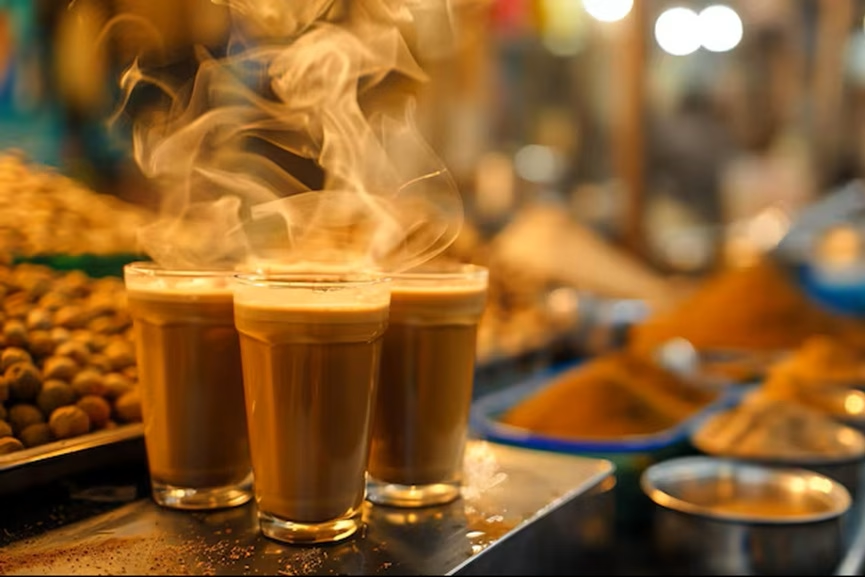
Across Indian cities, tea begins announcing itself before sunrise. The scent arrives first—boiling milk, crushed ginger, and tea leaves bubbling loudly in worn-out aluminum kettles. At tiny roadside stalls, half-awake customers gather for the first chai of the day, standing shoulder to shoulder before work, college, or long commutes begin.
These small tea stalls, often called chai tapris, are far more than places to drink tea. They are India’s unofficial discussion rooms. Here, office workers complain about deadlines while auto drivers discuss fuel prices. College students argue over cricket scores. Retired uncles confidently solve political crises no one assigned them to solve.
And somehow, everyone listens. Tea culture changes with geography, too, because India rarely does anything in just one style.

In Assam, tea is bold, strong, and unapologetic. In Kashmir, fragrant kahwa filled with saffron and almonds turns tea into something elegant and ceremonial. Mumbai thrives on cutting chai—small, powerful servings made for a city constantly racing against time. Kolkata treats tea almost poetically, often serving it in clay cups that somehow make conversations linger longer.
Then comes the uniquely Indian experience of train tea.
Almost every Indian traveller knows the familiar moment. A train slows at a station platform, and within seconds, a vendor walks past shouting, “Chaaaiii! Garam chai!” Suddenly, people who were perfectly fine moments ago begin craving tea as though it were essential for survival.
That is the magic of chai in India.
It is not merely about caffeine. It is about small pauses in crowded days. About strangers sharing benches. About conversations that start casually and stretch unexpectedly longer. In a country that is always moving, chai remains one of the few reasons people still stop for a moment.
And perhaps that is why one good cup of tea can make life feel lighter—or at least complicated with better flavor.