
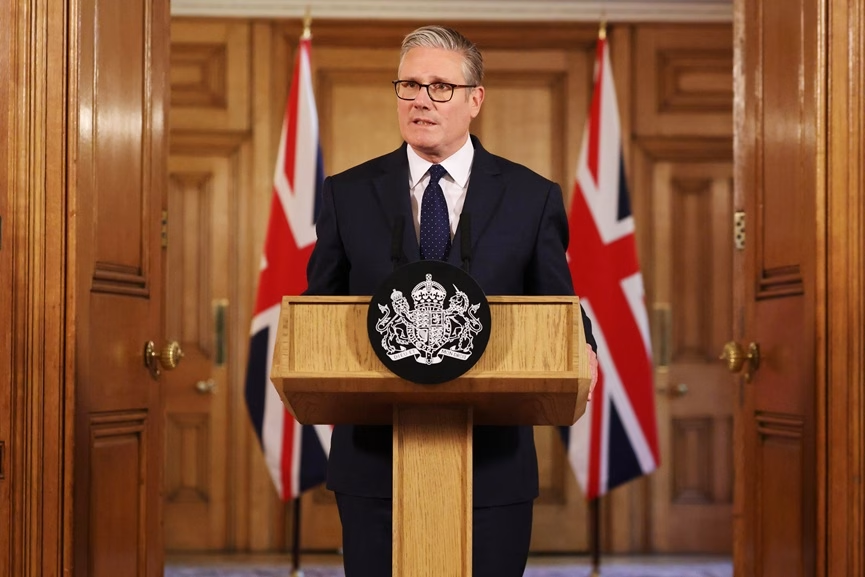
London: Keir Starmer has announced his resignation as Britain’s Prime Minister and leader of the governing Labour Party, bringing an abrupt end to a premiership that began with a commanding election victory just two years ago.
Starmer said he would remain as caretaker prime minister until Labour elects a new leader, a process expected to conclude before Parliament returns from its summer recess. His departure follows mounting pressure from Labour lawmakers, who increasingly questioned his ability to lead the party into the next general election after months of declining public support.
The resignation marks another chapter in Britain’s recent political instability, making Starmer the sixth British prime minister in the past decade to leave office before completing a full parliamentary term.
Watch live: My statement. https://t.co/MX7ga3FRGq
— Keir Starmer (@Keir_Starmer) June 22, 2026
Burnham Takes Centre Stage
Attention has quickly shifted to Andy Burnham, who is widely expected to succeed Starmer. Burnham confirmed on social media that he intends to stand for the Labour leadership. His path now appears significantly easier after former Health Secretary Wes Streeting announced he would support Burnham rather than contest the leadership himself.
Only sitting members of Parliament can run for Labour leader. Burnham’s recent return to Westminster, secured through a special parliamentary election, has positioned him to take over the party at a crucial moment.
If no other candidate enters the race, Labour could have a new leader as early as mid-July.
Keir has given huge service to our country and I want to thank him for his leadership and dedication during such a challenging period.
His decision marks the beginning of a transition and it is important that this process is conducted in an orderly and responsible way. I will…
— Andy Burnham (@AndyBurnhamGM) June 22, 2026
Emotional Farewell Outside Downing Street
Standing outside 10 Downing Street, where he had celebrated Labour’s election victory in 2024, Starmer delivered an emotional statement acknowledging that his own parliamentary party no longer believed he was the right person to lead.
He said he had accepted the party’s verdict ‘with good grace’ and confirmed that he had informed King Charles III of his decision before making the announcement.
Labour will officially open nominations for its leadership contest on July 9, with the new leader expected to take office before Parliament resumes on September 1.
Domestic Challenges
Starmer entered office promising economic recovery, stronger public services, and relief from Britain’s cost-of-living pressures. However, many of those ambitions remained difficult to achieve as his government struggled to deliver visible improvements.
His administration also faced criticism over several political decisions, including the appointment of Peter Mandelson as Britain’s ambassador to the United States, a move that drew controversy because of Mandelson’s past association with Jeffrey Epstein.
At the same time, Labour found itself squeezed politically from both sides. Some progressive voters shifted their support to the Green Party of England and Wales, while the anti-immigration Reform UK, led by Nigel Farage, continued gaining momentum in national opinion polls.
Trump Reacts to Starmer’s Exit
Even before the resignation was formally announced, Donald Trump commented on Starmer’s expected departure, linking it to disagreements over immigration and energy policy.
Relations between Starmer and Trump had initially been cordial but became increasingly strained over foreign policy issues, including the conflict involving Iran and broader international security matters.
International Reputation Remained Strong
Although his domestic standing weakened, Starmer maintained a positive reputation internationally. European leaders frequently praised his efforts to strengthen cooperation on security and his support for Ukraine following Russia’s invasion.
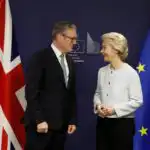
Ursula von der Leyen thanked Starmer for his leadership, saying he had quickly established himself as a respected statesman and had played an important role in strengthening European and Ukrainian security.
His final weeks as caretaker prime minister could include attending the next North Atlantic Treaty Organization summit before handing over power to his successor.
It can take many leaders years to grow into the statesman you became in just two years.
European and Ukrainian security is stronger because of you.
Thank you, dear Keir. pic.twitter.com/XkX53ZEG4b
— Ursula von der Leyen (@vonderleyen) June 22, 2026
Labour Looks Ahead
While many Labour MPs have united behind Burnham, others believe Starmer’s leadership deserved greater patience, arguing that global crises and economic pressures made governing particularly difficult.
Nevertheless, Labour now faces the challenge of rebuilding public confidence under a new leader as Britain prepares for the next phase of its political journey.