
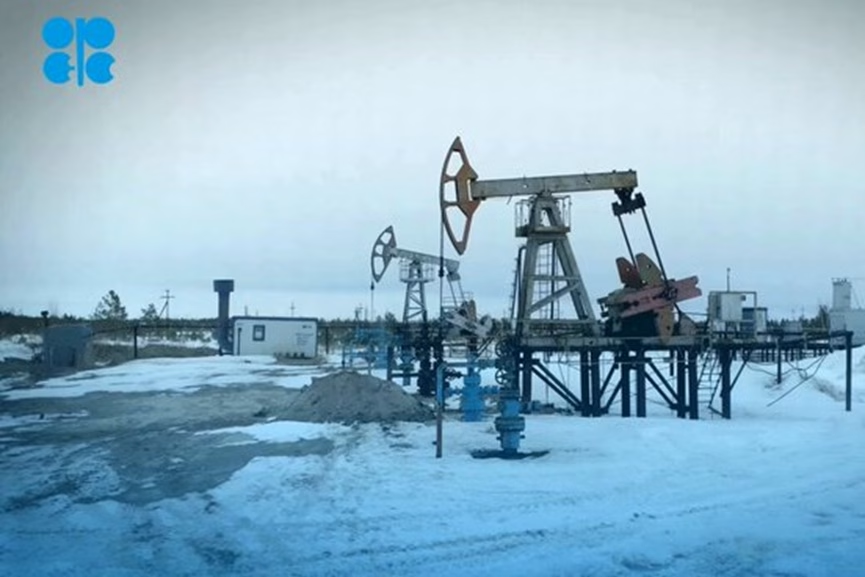
Vienna: The OPEC+ moved to raise oil production, announcing a modest increase of 188,000 barrels per day for June in a calculated effort to project continuity and calm after the unexpected departure of the United Arab Emirates.
Seven core producers—Saudi Arabia, Russia, Iraq, Kazakhstan, Kuwait, Oman, and Algeria—will implement the increase, continuing a pattern of gradual supply adjustments seen over the past three months.
The group framed the move as part of its collective commitment to keeping global oil markets stable, though it notably avoided any mention of the UAE’s exit.
While the announcement was widely anticipated, analysts suggest the real impact on supply may be muted. Several member countries are already struggling to meet existing production targets, meaning the additional quota may not fully translate into extra barrels reaching the market.
At the same time, global supply remains under strain. Ongoing tensions around the Strait of Hormuz have disrupted exports in recent weeks.
The situation escalated following actions by Iran in response to earlier strikes by the United States and Israel, adding another layer of uncertainty to an already tight market.
Saudi Arabia, Russia, Iraq, Kuwait, Kazakhstan, Algeria, and Oman adjust production and reaffirm commitment to market stability
Read Press Release ➡️https://t.co/FX9u07426n
— OPEC (@OPECSecretariat) May 3, 2026
Oil prices have remained above $100 per barrel for nearly two months, amplifying cost pressures across industries, from manufacturing to aviation. For many economies, especially import-dependent nations, the sustained price surge is becoming a growing concern.
The backdrop to this latest decision is the formal exit of the UAE from both OPEC and the broader OPEC+ grouping. The decision marks a significant shift for one of the world’s key oil producers.
UAE Energy Minister Suhail bin Mohammed Al Mazrouei described the step as part of a long-term strategic recalibration. The announcement followed a comprehensive review of national production priorities, signaling a more independent course in global energy markets. So far, the rest of the alliance has refrained from publicly commenting on the UAE’s departure.
Its absence from the latest production statement, however, has not gone unnoticed and could indicate a cautious approach as the group navigates internal changes alongside external pressures.