
San Francisco: Health-related questions have quietly become one of the most common reasons people turn to ChatGPT, ranging from understanding medical test reports to seeking guidance on diet and fitness.
OpenAI says hundreds of millions of such questions are asked every week, a trend that has led the company to introduce ChatGPT Health, a dedicated space designed to make health conversations more useful, secure, and personal.
ChatGPT Health is built as a separate, privacy-focused experience within ChatGPT. It allows users to connect their medical records and wellness apps so responses are based on their own health information rather than general advice. OpenAI says the goal is to help people better understand and manage their health while clearly supporting, not replacing, doctors and other healthcare professionals.
Introducing ChatGPT Health — a dedicated space for health conversations in ChatGPT. You can securely connect medical records and wellness apps so responses are grounded in your own health information.
Designed to help you navigate medical care, not replace it.
Join the…
— OpenAI (@OpenAI) January 7, 2026
The new feature includes stronger safeguards for sensitive data, including dedicated encryption and data isolation. Health conversations are kept separate from other chats, and OpenAI says they are not used to train AI models. Users remain in control, with the option to view or delete health memories and remove access to connected records at any time.
One of the key strengths of ChatGPT Health is its ability to bring scattered health data into one place. By linking services such as Apple Health, Function, or MyFitnessPal, users can get clearer insights into trends, test results, and wellness metrics.
Common uses include summarising bloodwork before a doctor’s visit, tracking cholesterol or fitness progress, and preparing questions for medical appointments. The experience works much like a regular chat, but with responses grounded in the user’s own data.
Users can interact through text or voice and can also use search or deep research tools for more detailed answers. Custom instructions within the Health section allow people to personalise how information is presented, set boundaries around sensitive topics, or focus on specific health goals.
OpenAI says ChatGPT Health was developed with extensive input from medical professionals. More than 260 physicians from 60 countries and a wide range of specialities contributed feedback, shaping how the system explains health information and encourages appropriate follow-up care. Responses are evaluated using HealthBench, a framework informed by real-world clinical standards.
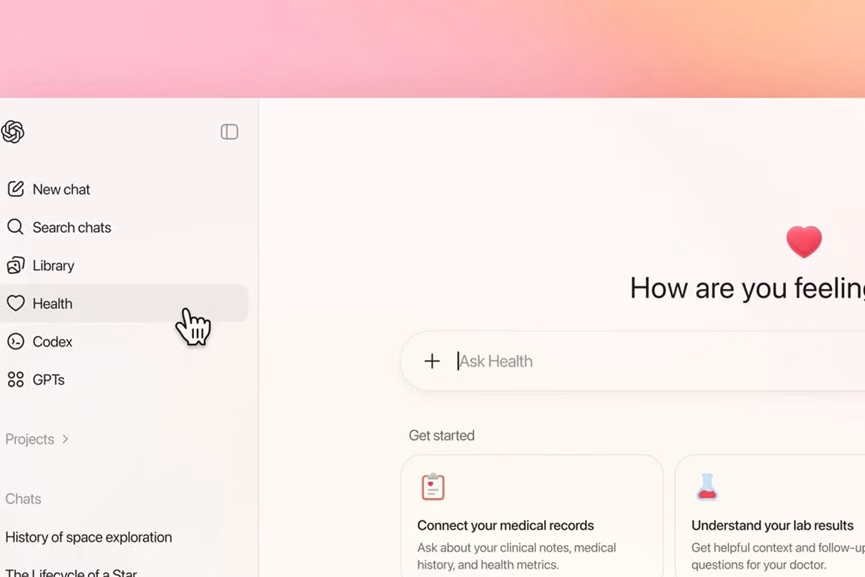
For now, ChatGPT Health is available only to a limited group of early users. Those interested can join a waitlist through OpenAI’s website. Once approved, a new Health section appears in the ChatGPT sidebar, offering a more structured and secure way to explore personal health questions.
OpenAI says that ChatGPT may use relevant context from non-Health chats to enhance health discussions, but information from Health never flows into other areas. Users can view or delete Health memories anytime through the Health space or the ‘Personalisation’ settings. Users can also remove access to their medical records at any time in the ‘Apps’ section of Settings.