
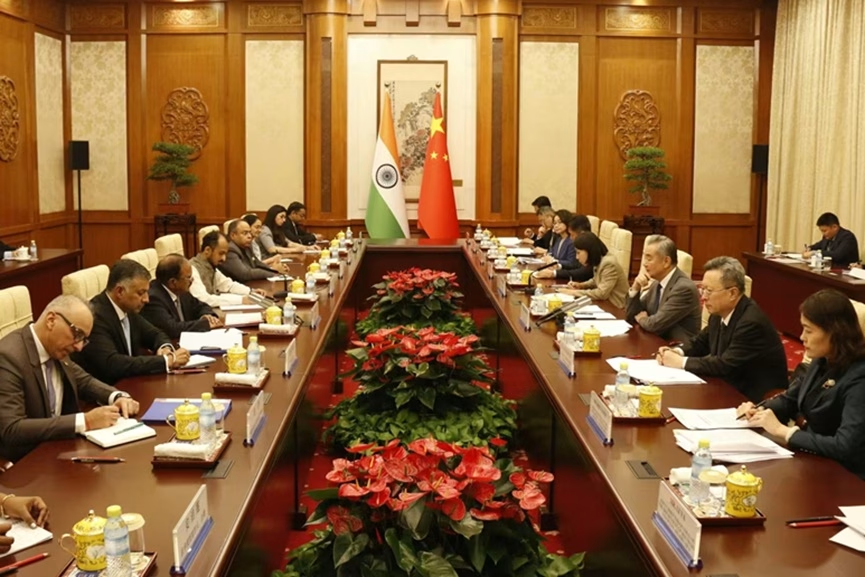
New Delhi: India and China have agreed to strengthen military communication and advance talks on boundary delimitation as part of efforts to prevent border tensions from disrupting bilateral relations.
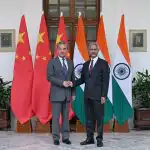
The agreement was reached during the 25th round of talks between India’s National Security Adviser Ajit Doval and Chinese Foreign Minister Wang Yi in Beijing on Tuesday under the Special Representatives mechanism. The mechanism, established in 2003, is aimed at addressing the long-standing boundary dispute between the two countries.
The eight-point outcome of the talks, released, outlined measures to improve border management and advance discussions on resolving the boundary issue.
Under the agreement, the two sides will establish an Expert Group on Boundary Delimitation and a Working Group on Border Management. The groups will work under the Working Mechanism for Consultation and Coordination on India-China Border Affairs and will first finalise their respective terms of reference.
The two countries also agreed to strengthen military-to-military communication by adding two meeting points for senior military commanders and two additional border military hotline channels in the Eastern and Middle Sectors.
The Middle Sector covers the border areas of Himachal Pradesh and Uttarakhand, while the Eastern Sector includes Sikkim and Arunachal Pradesh.
The latest measures reflect efforts by New Delhi and Beijing to prevent border-related incidents from affecting the broader relationship, as happened after the 2020 Galwan Valley clash.
NSA Shri Ajit Doval co-chaired the 25th Meeting of SRs on India-China Boundary Question with his counterpart H. E. Wang Yi, Member of the Politburo of the Central Committee of the CPC and China’s Foreign Minister on 25 August 2026 in Beijing. The two sides positively reviewed the… pic.twitter.com/op50eDrU8i
— India in China (@EOIBeijing) August 25, 2026
The two sides have cautiously pursued a reset in ties, including the resumption of border trade through Nathu La and Shipki La after a nearly six-year suspension. However, differences remain, particularly over Arunachal Pradesh, which China claims as part of Tibet.
Under the eight-point consensus, India and China also agreed to expand cooperation in border trade, pilgrimage and other areas to promote dialogue, peace and cooperation along the frontier.
India welcomed China’s efforts to increase the number of batches for the Kailash-Manasarovar Yatra in the Tibet Autonomous Region.
The two sides further agreed to hold the next meeting of the Expert-Level Mechanism on Trans-border Rivers in September and maintain communication on hydrological data sharing and the renewal of relevant memoranda of understanding.
The talks come as India and China seek to stabilise ties amid wider global uncertainties, including disruptions to energy supply chains caused by conflicts in Iran and Ukraine.
Chinese President Xi Jinping is also expected to visit New Delhi for the BRICS summit from September 12 to 13, providing another potential opportunity for high-level engagement between the two countries.