
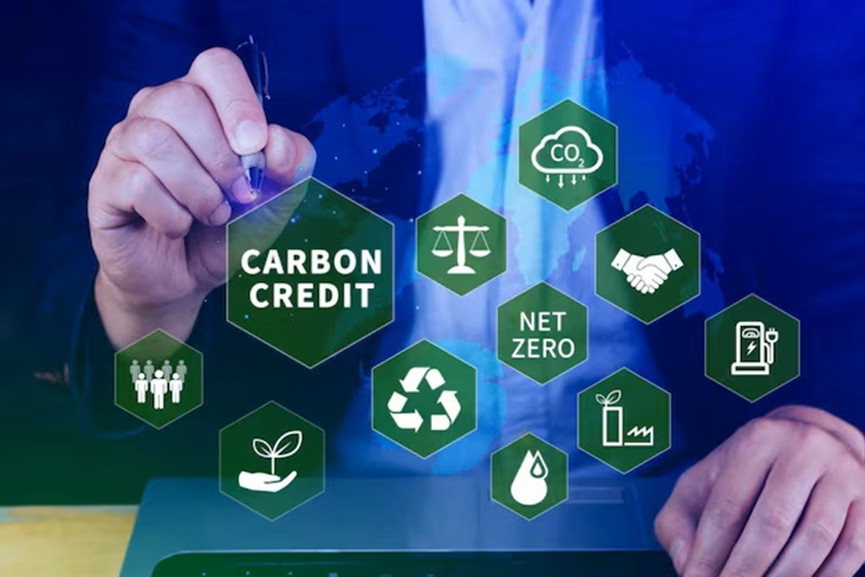
Geneva: The United Nations has approved the first batch of carbon credits under a new global market created by the 2015 Paris Agreement to channel climate finance into real-world emission cuts.
The credits come from a clean cooking initiative in Myanmar that distributes fuel-efficient stoves to households. The project, developed in partnership with a South Korean company, aims to reduce greenhouse gas emissions while easing pressure on local forests. The resulting carbon credits will count toward the climate targets of both Myanmar and South Korea.
Clean Cooking, Climate Impact
According to UN Climate Change, more than two billion people worldwide still lack access to clean cooking solutions.
Traditional cooking methods often rely on wood or charcoal, contributing to deforestation and dangerous indoor air pollution.
The improved stoves introduced in Myanmar burn biomass more efficiently, requiring less fuel and producing far less smoke inside homes.
Beyond cutting emissions, the initiative is expected to deliver health benefits, particularly for women and children who are most exposed to household air pollution.
UN Climate Change Executive Secretary Simon Stiell said the mechanism can direct finance to projects that make a tangible difference in daily life while supporting national climate goals.
Tighter Rules, Lower Credits
The new credits are issued under the Paris Agreement Crediting Mechanism (PACM), which replaces earlier offset systems that faced criticism for overstating climate benefits. The UN says emission reductions are now calculated more conservatively — around 40 percent lower than under previous schemes — in an effort to strengthen credibility.
The rules for the revamped carbon market were finalized at COP29, where negotiators sought to address long-standing concerns over transparency and accountability.
Praise and Skepticism
While some environmental groups have welcomed clearer standards, others remain cautious. Greenpeace warned that loopholes could allow polluters to rely on offsets instead of cutting emissions at the source.
Supporters argue the new safeguards strike a balance between environmental integrity and practical climate financing. Officials overseeing the system say their priority is to build trust from the outset and ensure the market delivers measurable, verifiable results.