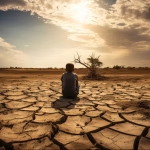

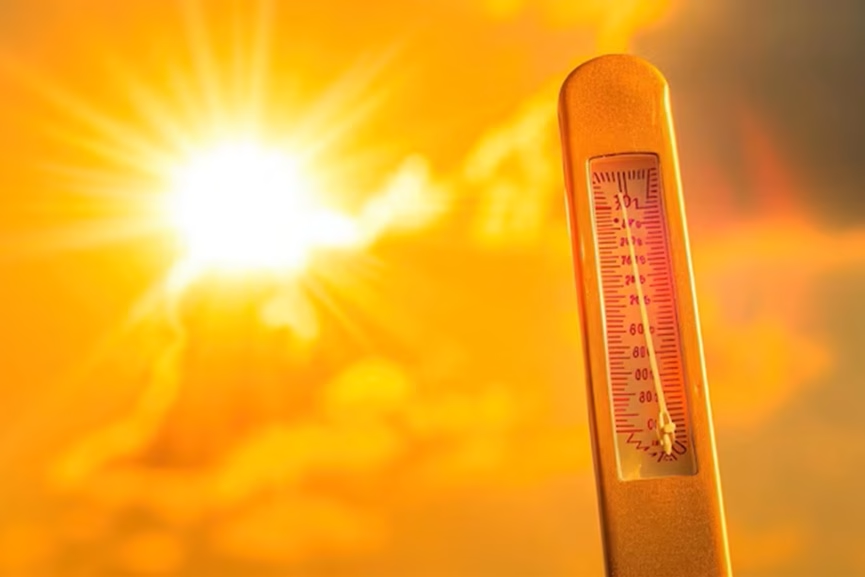
US: A new global climate outlook has warned that the world is on track for at least one year of record-breaking heat before the end of this decade, as rising emissions continue to trap more warmth in the atmosphere.
According to a forecast compiled by the World Meteorological Organization and based on research led by the UK Met Office, there is an 86 percent likelihood that at least one year between 2026 and 2030 will surpass 2024 as the hottest year ever recorded.
Scientists also estimate a 75 percent chance that the global average temperature across this five-year period will stay more than 1.5°C above pre-industrial levels—a threshold long linked to more dangerous heatwaves, floods, droughts, and storms.
The report points to a combination of steadily rising carbon dioxide emissions and natural climate patterns such as El Niño as key drivers.
Another El Niño phase is expected toward the end of 2026, which could push temperatures even higher and potentially set a new global record as early as 2027.
Heat already being experienced in many regions is part of this broader trend. Recent heatwaves across Europe have underscored the growing intensity and frequency of extreme weather events linked to global warming.
UN climate chief Simon Stiell, Executive Secretary of the UN Framework Convention on Climate Change, said recent conditions are a “brutal reminder” of the escalating impacts of climate change, warning that rising heat is already affecting lives and economies across continents, including Asia.
The outlook also suggests that even though the 2°C limit set under the Paris Agreement is not yet inevitable, the chances of staying within safer temperature bounds are narrowing without faster cuts in fossil fuel use.
Scientists involved in the assessment stress that every fraction of a degree matters. Even small increases in global temperature significantly raise the risk of extreme weather and long-term climate disruption.
The message from the report is clear: the next few years are likely to be among the hottest ever measured, and the direction of change will depend heavily on how quickly global emissions are reduced.