
Tel Aviv: Israel has imposed sweeping emergency measures after Iran launched missiles toward its territory in response to a joint US-Israeli strike on Iranian targets.
Defense Minister Israel Katz declared a nationwide state of emergency, warning that further missile and drone attacks could follow. Public gatherings were banned, schools and most workplaces were closed, and hospitals began shifting patients into fortified underground units.
The Israeli military said tens of thousands of reservists were being mobilized, including forces assigned to reinforce land borders. Police urged residents to avoid unnecessary travel to keep roads clear for emergency and security services.
Cities on High Alert
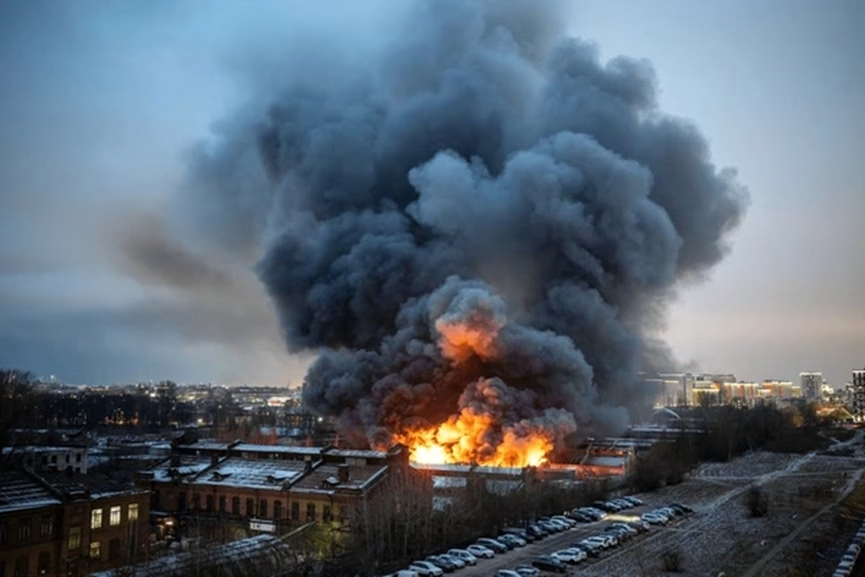
Air raid sirens sounded in several areas as Iran’s initial barrages were detected. While Israel’s multi-layered air defense system intercepted many incoming projectiles, explosions from interceptions echoed across cities, including Jerusalem. In the capital, residents rushed to supermarkets and cash machines, bracing for prolonged disruption.
The US Embassy in Jerusalem instructed its staff to shelter in place, having earlier advised personnel that they could leave the country if they chose. Israel also closed its airspace to civilian flights, though land crossings with Egypt and Jordan remained open, according to airport authorities.
Iran’s attacks are designed to terrorize civilians and destroy neighborhoods. This is what we operate against. pic.twitter.com/sL73DqWtGk
— Israel Defense Forces (@IDF) February 28, 2026
Hospitals Move Underground
At Sheba Medical Center near Tel Aviv, entire wards were transferred below ground as part of emergency protocols.
Director-General Itai Pessach said the hospital had moved into advanced preparedness mode in anticipation of escalation. Departments and essential services were being relocated to protected areas designed to withstand missile strikes.
Israel’s health system has maintained fortified infrastructure for years, reflecting repeated rounds of regional conflict.
Despite the tense atmosphere, some residents in Tel Aviv gathered along the Mediterranean promenade before the first Iranian response, expressing confidence in the country’s defenses.
The latest confrontation follows a 12-day aerial conflict between Israel and Iran last year that left dozens dead in Israel and hundreds in Iran. Tel Aviv and parts of southern Israel, home to several military facilities, were hit during that exchange.
So far, there have been limited reports of damage or casualties from the latest Iranian missile fire. Authorities continue to urge the public to remain near bomb shelters and follow official guidance as the situation develops.