
New Delhi: India and Canada have set an ambitious deadline to conclude a long-pending free trade agreement by the end of this year, marking a decisive step toward rebuilding ties after nearly two years of diplomatic strain.
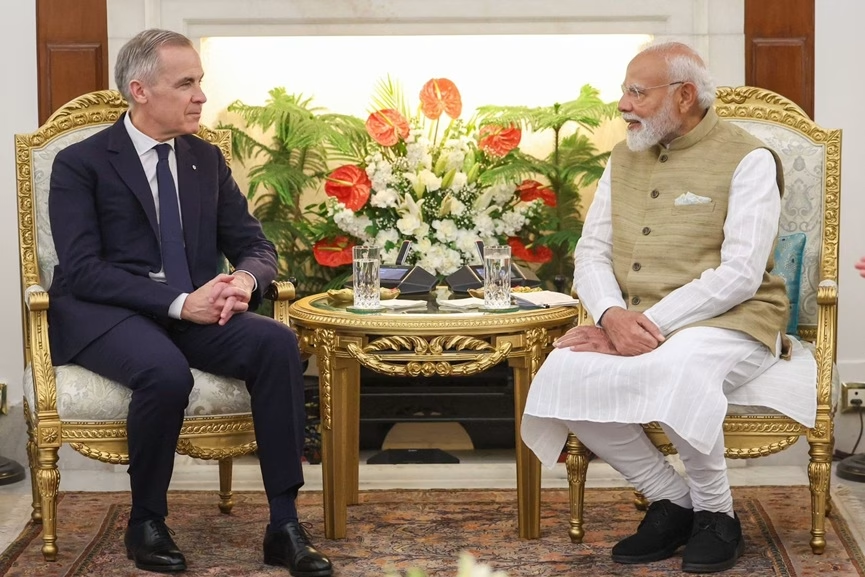
Speaking in New Delhi after talks with Prime Minister Narendra Modi, Canadian Prime Minister Mark Carney said both sides were committed to finalizing a comprehensive economic partnership that would significantly expand trade and investment flows.
Modi said the proposed agreement is expected to lift bilateral trade to $50 billion by 2030, up sharply from nearly $9 billion in 2024–25. Negotiations on the pact, which had stalled amid diplomatic tensions, resumed momentum last year as both governments signaled a willingness to reset relations.
“This is not merely the renewal of a relationship. It is the expansion of a valued partnership with new ambition, focus, and foresight,” Carney said during his first official visit to India.
Landmark Uranium Agreement
A key outcome of the visit was a $2.6 billion uranium supply agreement aimed at supporting India’s growing nuclear energy program. The deal was signed between the Indian government and Canadian energy major Cameco, ensuring long-term uranium supplies for Indian reactors.
Modi described the agreement as a landmark step in strengthening civil nuclear cooperation, adding that it would help India secure clean and reliable base-load power as the country accelerates its energy transition. Both countries also agreed to explore collaboration on small modular reactors and advanced nuclear technologies.
PM Carney and I agreed on the need to further deepen economic linkages. We want to take bilateral trade to $50 Billion by 2030. The investment of Canadian pension funds in India reflects deep confidence in India’s growth story. We also talked about expanding partnerships in…
— Narendra Modi (@narendramodi) March 2, 2026
Expanding Strategic Cooperation
Beyond trade and energy, the two leaders discussed strengthening defense manufacturing partnerships and enhancing maritime domain awareness—a signal of growing strategic alignment in the Indo-Pacific region.
Carney’s four-day visit is widely viewed as a turning point after relations deteriorated sharply in 2023. Ottawa had accused New Delhi of involvement in the killing of a Sikh separatist activist in Canada—allegations India firmly rejected. The dispute led to the expulsion of diplomats and a freeze in trade talks.
In recent months, however, both sides have quietly stepped up engagement. Carney noted that government-level interactions over the past year have exceeded those of the previous two decades combined.
The renewed push for a trade pact comes as both India and Canada look to reduce dependence on the United States amid shifting tariff policies and trade uncertainties. Officials said future cooperation will prioritize clean energy, critical minerals, agricultural value chains, and advanced manufacturing.
India has been actively expanding its trade footprint. It concluded a free trade agreement with the European Union earlier this year and has paused discussions with Washington, awaiting clarity on tariff measures introduced under President Donald Trump.