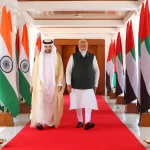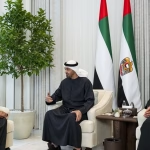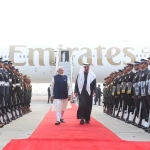

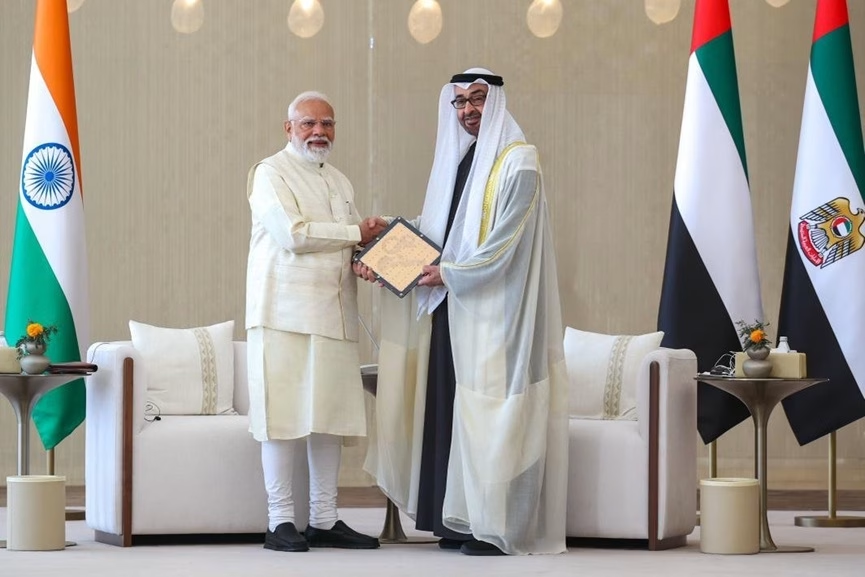
Abu Dhabi: India and the United Arab Emirates (UAE) signed a wide-ranging set of agreements covering energy, defense, investment, and maritime cooperation, marking a fresh push in their strategic partnership as West Asia tensions continue to unsettle global oil routes.
The agreements were concluded during talks in Abu Dhabi between Prime Minister Narendra Modi and UAE President Sheikh Mohamed bin Zayed Al Nahyan.
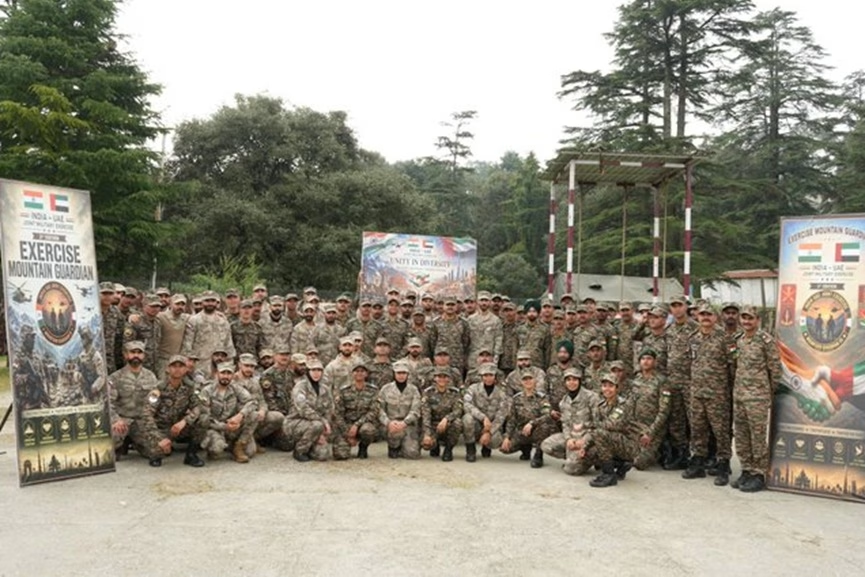
The visit comes at a time when concerns over energy security and shipping disruptions have intensified across the region. A key outcome was a new framework for defense cooperation focused on joint development of military systems, technology sharing, innovation, training, and maritime security.
كما شهدت هذه الزيارة إلى دولة الإمارات إبرام اتفاقيات محورية في قطاعات حيوية، مثل الطاقة والدفاع والبنية التحتية والشحن والتقنيات المتقدمة؛ مما منح دفعة جديدة للشراكة الاستراتيجية الشاملة بين الهند والإمارات. وفي تطور مهم آخر، أعلنت دولة الإمارات عن استثمارات بقيمة 5 مليارات… pic.twitter.com/RKQMFTUdY6
— Narendra Modi (@narendramodi) May 15, 2026
Both sides said they would also explore collaboration in defense manufacturing and advanced capabilities, signaling a deeper industrial partnership in the sector.
Energy security formed the core of the discussions. Indian Strategic Petroleum Reserves Limited and Abu Dhabi National Oil Company signed an agreement to expand cooperation in strategic petroleum reserves, including storage of crude and potential joint work on LNG and LPG facilities. The arrangement is expected to increase UAE participation in India’s strategic reserves and support gas storage capacity.
In a parallel agreement, Indian Oil Corporation Limited and Abu Dhabi National Oil Company agreed on long-term LPG supply arrangements, aimed at ensuring stable cooking fuel availability for India and strengthening commercial energy ties.
Highlights from a productive UAE visit, which will deepen our bilateral friendship… pic.twitter.com/e8D8Wuuz0j
— Narendra Modi (@narendramodi) May 15, 2026
The UAE also committed around $5 billion in fresh investments in India. This includes proposed investments by Emirates NBD and RBL Bank, along with participation from other major funds and institutions. The investment package is expected to support infrastructure, banking, and long-term capital flows.
Other major outcomes included cooperation between Cochin Shipyard Limited and Drydocks World to develop ship repair facilities in India, particularly at Vadinar in Gujarat, along with skill development in maritime services.
The two sides also agreed on setting up a supercomputing and artificial intelligence cluster to boost India’s high-performance computing capabilities. Officials said it would support India’s broader AI development goals and digital infrastructure expansion.
Substantive outcomes, which will add vigour to the India-UAE friendship. https://t.co/e3RAsm1tw6
— Narendra Modi (@narendramodi) May 15, 2026
A new digital trade corridor was also operationalized, linking customs and port systems to improve cargo movement, reduce logistics costs, and speed up clearance processes. Both sides said it would help build more resilient supply chains amid global disruptions.
During the talks, the leaders also reviewed the security situation in West Asia. India expressed concern over recent attacks in the region and called for restraint, while also offering support for stability and peace efforts.
Modi described the agreements as important steps that would strengthen cooperation across energy, defense, technology, and trade, calling the visit brief but productive. He later left for the Netherlands as part of his multi-nation diplomatic tour.