
New York: SpaceX has filed for an initial public offering (IPO) that would value the company at nearly $1.77 trillion, setting the stage for one of the largest stock market debuts ever and marking a major milestone for the aerospace and technology company founded by Elon Musk.
According to a filing submitted to the US Securities and Exchange Commission (SEC), SpaceX plans to offer 555.6 million shares for $135 each, raising approximately $75 billion.
The proposed valuation would place the company among the world’s most valuable publicly traded firms and surpass the valuation achieved by Saudi Aramco during its record-breaking 2019 stock market debut.
The company said its shares are expected to begin trading on the Nasdaq exchange on June 12. Founded in 2002, SpaceX has grown from a private rocket manufacturer into a leading player in the global space industry.
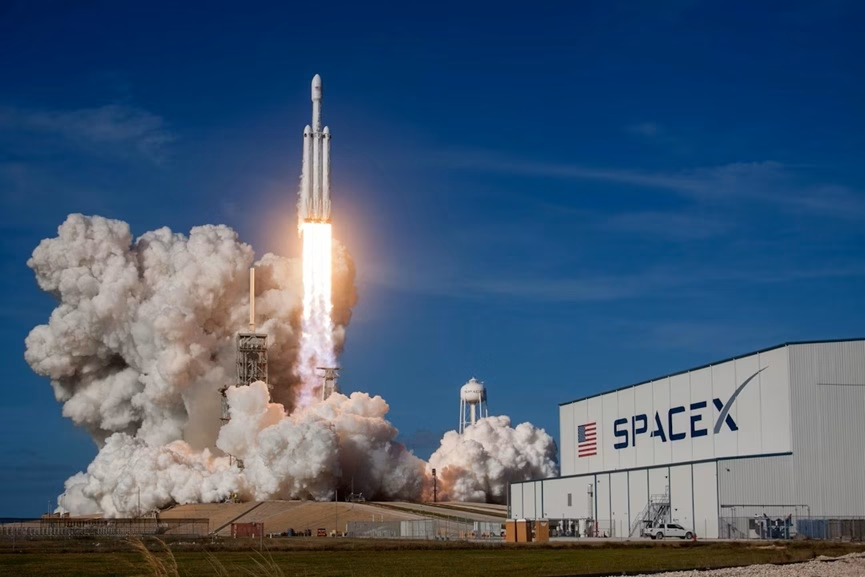
The company designs, builds, and launches rockets and spacecraft for government agencies, commercial customers, and international partners.
It is widely known for developing reusable rocket technology, which has significantly reduced launch costs and increased the frequency of space missions.
In addition to its launch business, SpaceX operates Starlink, a satellite-based internet service that provides connectivity to users around the world.
The company has also expanded into artificial intelligence-related activities through its xAI division, broadening its presence beyond the aerospace sector.
The SEC filing showed that Musk, who owns approximately 42 percent of SpaceX, will continue to maintain effective control of the company following the IPO.
Through a dual-class share structure that grants certain shares greater voting rights, Musk is expected to hold more than 82 percent of the company’s voting power after the listing.
Market observers noted that SpaceX has departed from the conventional IPO process by setting a specific share price before launching its investor roadshow.
Companies typically announce a preliminary price range and make adjustments based on investor demand during the marketing period.
The planned valuation reflects strong investor confidence in SpaceX’s long-term growth prospects despite the company’s current financial performance.
Financial disclosures showed that SpaceX reported a net loss of $4.9 billion on revenue of $18.7 billion in 2025. The company also recorded a loss of $4.3 billion during the first quarter of 2026.
Supporters of the valuation argue that SpaceX has established a dominant position in several rapidly growing markets and continues to benefit from increasing demand for space-based services.
The IPO is also expected to serve as an important test of market appetite for high-growth technology companies that are prioritizing expansion over profitability.
SpaceX’s public debut is expected to be one of the most closely watched financial events of the year. The offering could be followed by listings from other major technology firms, including artificial intelligence companies seeking to capitalize on strong investor demand for emerging technologies.