
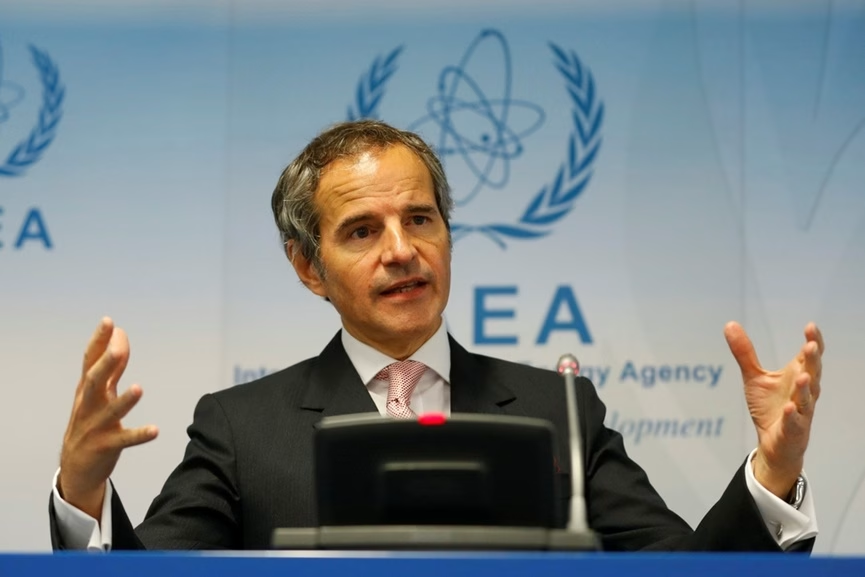
United Nations: Global nuclear power capacity could more than triple by 2060, driven by rising electricity demand, artificial intelligence (AI) data centers, and technology companies’ demand for reliable, carbon-free energy, International Atomic Energy Agency (IAEA) Director-General Rafael Grossi stated.
In the agency’s annual report to the United Nations General Assembly, Grossi said a growing number of countries view nuclear energy as essential to strengthening energy security, alongside the expansion of other low-carbon energy sources.
“In 2025, more than 400 operating reactors in more than 30 countries produced 10% of global electricity and a quarter of its low-carbon electricity,” Grossi said. He added that more than 60 new reactors are under construction, while projections for future nuclear capacity have increased significantly.
Grossi also addressed nuclear security concerns involving Iran and North Korea, as well as risks to nuclear safety arising from the war in Ukraine. He warned of reports that additional countries were considering acquiring nuclear weapons, although he did not identify them.
On Iran, Grossi noted that the technical groundwork for a diplomatic agreement had been completed and called on the parties to intensify efforts to reach a settlement. He stressed that any sustainable agreement would require the IAEA’s verification role and the return of agency inspectors to the country.
“IAEA inspectors must be able to return to Iran expeditiously. That requires a return to the negotiating table,” he underscored.
North Korea’s expanding nuclear program, which operates without IAEA oversight, remains another major concern, Grossi said. He described the programme as a warning of the consequences of violating United Nations Security Council resolutions prohibiting the country’s nuclear weapons development.
In Ukraine, Grossi highlighted the precarious situation at the Zaporizhzhia nuclear power plant, Europe’s largest nuclear facility. Frequent power losses, limited backup diesel supplies and ongoing military activity continue to threaten the plant and its workforce, he said.
Grossi also reported progress in clarifying Syria’s nuclear activities following nearly two decades of uncertainty. He attributed the progress to engagement with the government of interim President Ahmad al-Sharaa.
In September, Grossi reported that the government of former Syrian President Bashar Assad, which was ousted in December 2024, had been constructing a nuclear reactor configured to produce fissile material that could potentially be used in nuclear weapons.
The IAEA’s latest assessment highlights the growing role of nuclear energy in meeting future electricity demand while underscoring the continuing challenges of nuclear non-proliferation, international verification, and the protection of nuclear facilities during armed conflicts.