
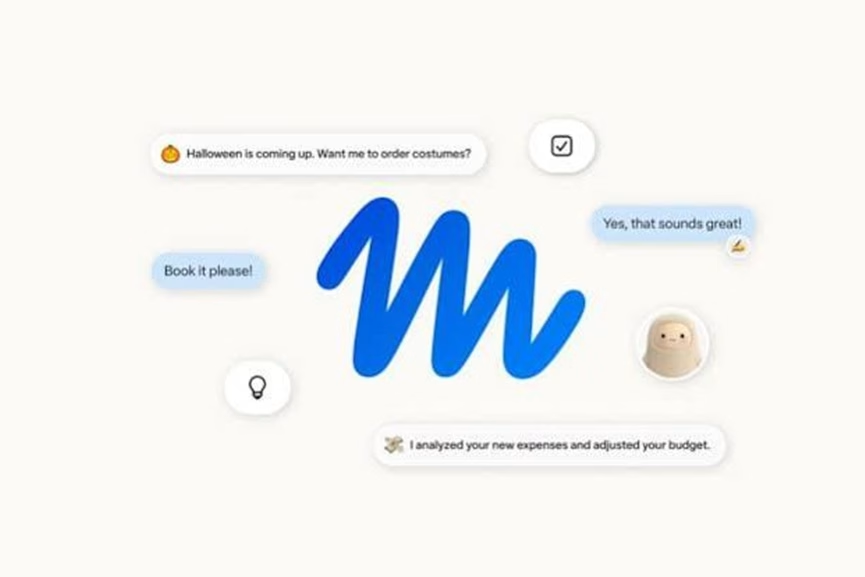
California: Meta has launched Muse, a personal Artificial Intelligence (AI) agent designed to handle everyday tasks and work toward longer-term goals on behalf of users.
Muse is built as a secure and private assistant that can be used through the dedicated Muse app or directly within WhatsApp.
Muse operates through Muse Secure VM, a private virtual computer that stores the AI agent and a user’s personal data separately from other users’ agents.
Muse automates everyday tasks
Users can tell Muse what they want to accomplish, after which the agent creates a plan and carries out the required steps using Muse Spark, Meta’s model developed for real-world tasks.
The agent can perform activities such as sending emails and booking travel. It can also browse websites, complete online forms, and negotiate deals on behalf of users.
For longer-term goals, Muse can continue working in the background after the app is closed. It can return to the user when circumstances change or when approval is required, including before sending an email or completing a purchase.
Meta stated that Muse helps users achieve outcomes with less effort, including selling a car, negotiating a lower bill, or modifying a fitness plan as routines change.
Introducing Muse, a personal agent that gets things done for you, powered by Muse Spark 1.3.
Get an inside look at how we built Muse and what it can do for you: https://t.co/qzFgoNAUSV https://t.co/KNCQwQXqyL pic.twitter.com/7skLRgWCaI
— AI at Meta (@AIatMeta) September 8, 2026
Muse supports shopping and payments
Muse can complete purchases using Link, Stripe’s payment tool. Meta said this makes Muse the first AI agent covered by Link’s buyer protections, which include coverage for eligible lost or damaged items, price-drop refunds, free returns and a return guarantee.
For each purchase, Link generates a one-time-use card, keeping the user’s actual card details hidden from Muse. Meta said support for Shop Pay and 1Password is also planned.
Muse can also retain information that users choose to share with it. This allows the agent to make suggestions based on previous interactions, such as turning a saved recipe into a shopping list, preparing a dinner-party menu, or remembering a friend’s dietary requirements.
Privacy and security
Muse operates within a private virtual computer and is separated from other users’ agents. A second security system, Sentinel, reviews and approves actions Muse attempts to take online and requests user permission when required.
The agent does not directly access passwords or payment information. Users can decide which apps Muse can connect to, control its permissions, and disconnect it at any time.
Meta emphasized that users could opt out of having their data used to train its AI models. Personal conversations with Muse are not shared with Meta’s advertising systems.
Later this year, Meta plans to introduce Muse Confidential VM, a more secure version that will encrypt user data with a key held only by the user.
Muse is currently rolling out in the United States on iOS, Android, and muse.ai, with support for Meta AI glasses expected in the future. The service is free for most users, while paid subscription plans will provide access to additional features.