
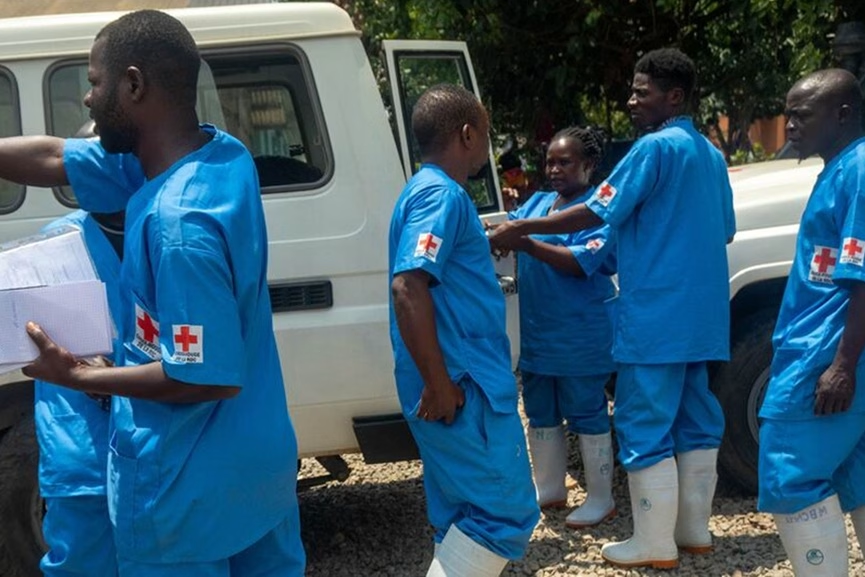
Kinshasa: The death toll from Ebola in the Democratic Republic of the Congo (DRC) has exceeded 5,000, according to government data released on Friday, as authorities continue to struggle to contain the country’s deadliest recorded outbreak of the virus.
More than 10,000 people have been infected since the outbreak was declared in May, making it the second-largest Ebola epidemic on record. The outbreak is caused by the Bundibugyo strain of the virus, for which there are currently no approved vaccines or specific treatments.
The spread has been accelerated by delayed detection, ongoing conflict, and pressure on the country’s already strained healthcare system. The virus has reached eight of the DRC’s 26 provinces and has also spread beyond its borders.
Nigeria last week became the fourth African country to report an Ebola case linked to the current outbreak, extending its geographic spread to West Africa. Kenya and Uganda have also reported cases, raising concerns about further cross-border transmission.
The current outbreak is the second-largest Ebola epidemic recorded globally, surpassed only by the 2014–2016 West African epidemic. That outbreak infected more than 28,600 people and claimed over 11,000 lives across Guinea, Liberia, and Sierra Leone.
Several governments have introduced travel restrictions and quarantine measures to limit the spread of the virus. On Friday, Saudi Arabia announced the suspension of travel to and entry from Kenya, according to the Saudi Press Agency (SPA).
The measures include suspending travel by Saudi citizens to Kenya and halting the issuance of all categories of visas to Kenyan nationals. The Kingdom has also prohibited entry for travelers arriving from Kenya, including those transiting through third countries, if they have stayed in Kenya or other Ebola-affected countries during the preceding 21 days. The restrictions are intended to limit the risk of the virus entering Saudi Arabia through international travel.
Saudi Arabia had previously imposed similar restrictions in June on travel to and entry from the DRC, Uganda, and South Sudan as part of its response to the outbreak.