
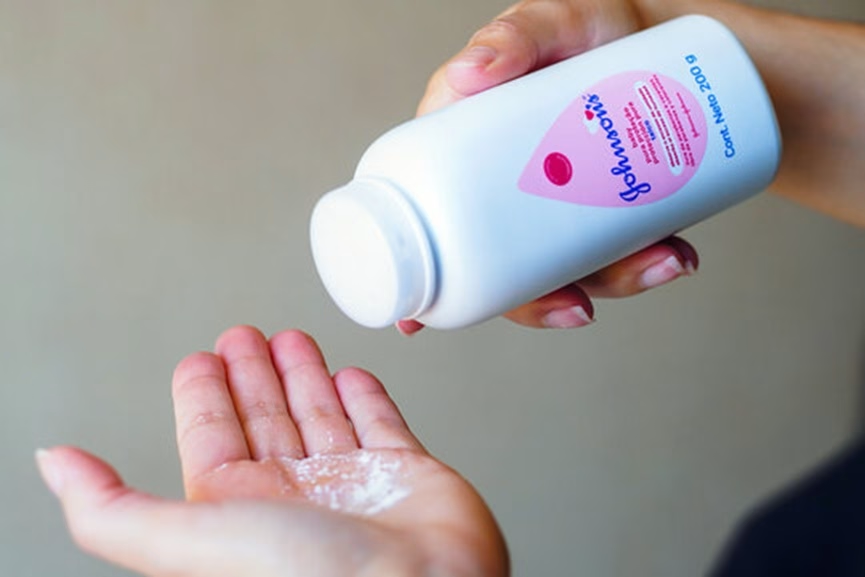
New York: Johnson & Johnson has agreed to pay an estimated $5.5 billion to settle about 76,000 lawsuits claiming its talc-based baby powder and other talc products caused ovarian cancer, marking one of the biggest product liability settlements in recent years.
The agreement is expected to bring an end to a legal battle that has stretched for more than a decade. It covers nearly all remaining ovarian cancer claims filed against the healthcare giant in federal and state courts. The settlement will become final only if at least 95 percent of eligible claimants agree to its terms.
The company has consistently maintained that its talc products are safe and do not cause cancer. Despite agreeing to the payout, Johnson & Johnson said that the decision was made to avoid years of continued litigation rather than because of any admission of wrongdoing.
Erik Haas, the company’s Vice President of litigation, noted that the claims lacked merit but added that resolving the cases would allow the company to focus on developing medicines and medical devices.
Johnson & Johnson expects to pay $3 billion in 2027, with the remaining amount to be paid in 2028. However, the final payout could rise if more eligible claimants join the settlement.
The deal follows a series of courtroom victories for Johnson & Johnson, including recent rulings that made it more difficult for plaintiffs to prove that talc directly caused ovarian cancer. Last week, a federal judge questioned whether individual claimants could establish a clear scientific link between talc use and their illness.
Johnson & Johnson stopped selling talc-based baby powder in the United States in 2020 and replaced it with a cornstarch-based version. The company had also attempted to resolve the litigation through a controversial bankruptcy strategy involving a subsidiary, but those efforts were rejected by the courts.
Unlike the failed bankruptcy proposals, the new settlement applies only to existing lawsuits and does not cover future claims. Attorneys for the plaintiffs said this approach allows current claimants to receive higher payouts and faster compensation, with payments expected to be completed within 18 months if the agreement is finalized.