
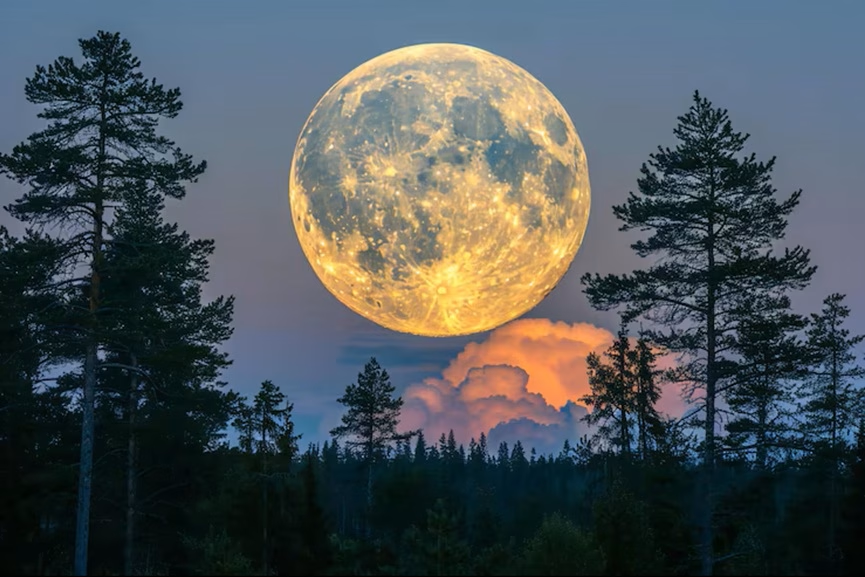
India: A striking Wolf Supermoon will light up the night sky on January 3, 2026, offering skywatchers a brighter and slightly larger full Moon to welcome the new year.
This lunar event occurs when the full Moon coincides with its closest approach to Earth, known as perigee. At a distance of about 362,000 kilometres, the Moon will appear noticeably brighter than usual, shining up to 30 percent more intensely and looking around 14 percent larger than a regular full Moon. It will be the first full Moon of 2026 and the opening act of a series of three supermoons expected this year.
The added brilliance is the result of a rare alignment. The Moon will be near Earth, the Earth itself will be close to the Sun, and the Moon will be fully illuminated. Together, these factors create a vivid and eye-catching spectacle in the night sky.
In India, the Wolf Supermoon will become visible shortly after sunset on January 3, around 5.45 to 6.00 pm IST. It will rise in the eastern sky, often taking on a warm golden or orange tint as it climbs higher. The Moon will remain visible throughout the night before setting in the west at dawn. Jupiter is also expected to be visible nearby, adding to the visual appeal.
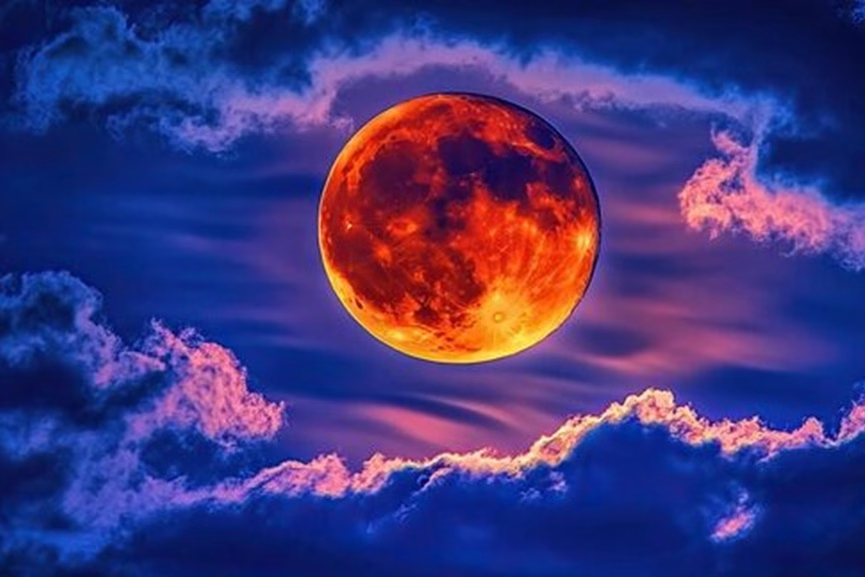
While the increase in size may be subtle to the naked eye, the enhanced brightness will be easily noticeable, making it an ideal moment for both casual observers and photography enthusiasts alike.
The Wolf Moon gets its name from old Northern Hemisphere traditions, linked to the sound of wolves howling during the cold midwinter nights. Although the Moon will officially reach its full phase around 10.02 to 10.04 GMT, it will appear full for several nights before and after the peak.
For the best experience, skywatchers are advised to step outside during moonrise on January 2 or 3 and enjoy one of the most captivating lunar displays of the year.