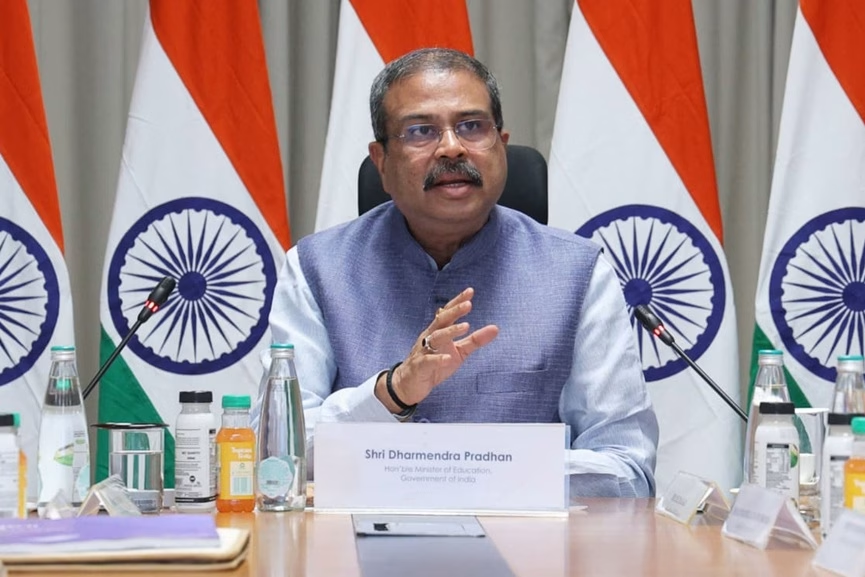

New Delhi: A day after Union Education Minister Dharmendra Pradhan resigned amid mounting protests over the NEET paper leak controversy, Prime Minister Narendra Modi announced the formation of a high-powered task force to recommend sweeping reforms to India’s examination system.
The panel will be led by technology expert and Aadhaar architect Nandan Nilekani and is expected to focus on making public examinations more transparent, secure, and technology-driven.
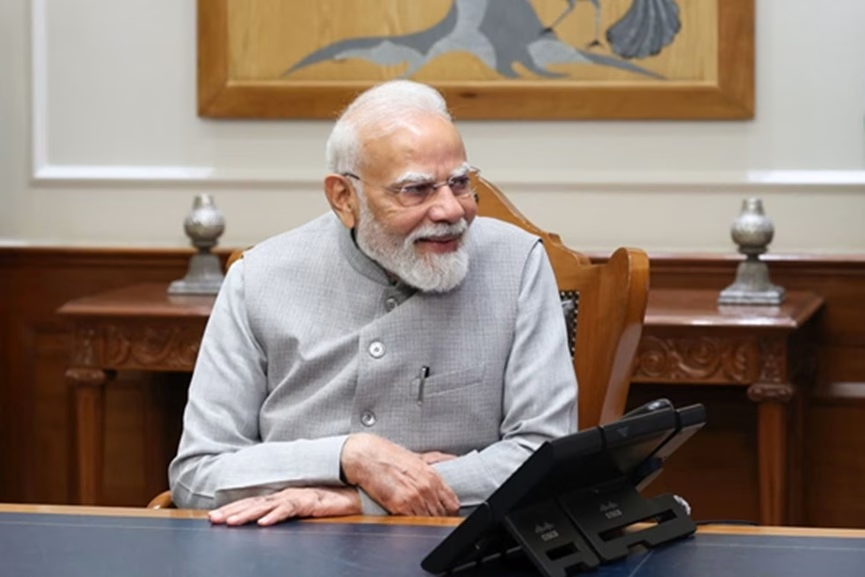
In a video message shared on social media, the Prime Minister said the government was committed to restoring the credibility of competitive examinations and would implement the panel’s recommendations.
“We have decided to constitute a high-powered task force under the leadership of Shri Nandan Nilekani. The panel will focus on examination reforms, and its recommendations will be implemented to strengthen the credibility of future exams,” PM Modi said.
HIGH POWERED TASK FORCE on examination reforms under the leadership of Shri Nandan Nilekani constituted.@NandanNilekani pic.twitter.com/mMpmPdIEL5
— Narendra Modi (@narendramodi) July 26, 2026
According to sources, the committee will include former ISRO Chairman S. Somnath, former Intelligence Bureau Director Tapan Deka, IIT Madras Director V. Kamakoti, former Education Secretary Anita Karwal, and logistics expert Amrit Lal Meena.
Nilekani, co-founder of Infosys, is widely known for leading the Aadhaar project as the first chairman of the Unique Identification Authority of India (UIDAI).
Without directly referring to Dharmendra Pradhan’s resignation, the Prime Minister said the government had already taken several steps to protect students’ interests. He asserted that those responsible for compromising the future of students were ‘rotting in jail.’
Modi also said fast-track courts had been established to ensure speedy trials in paper leak cases and that the government was moving ahead with legislation containing stricter legal provisions against examination fraud.
“The exam system must be effective, transparent, and technology-driven. We are committed to ensuring that such incidents do not affect the future of our youth,” Modi added.
Nothing is more important than the welfare and future of our youth!
We have decided to set up fast-track courts to ensure swift and stringent punishment for those involved in paper leaks. Have directed the concerned authorities and officials to take all necessary steps in this…
— Narendra Modi (@narendramodi) July 23, 2026
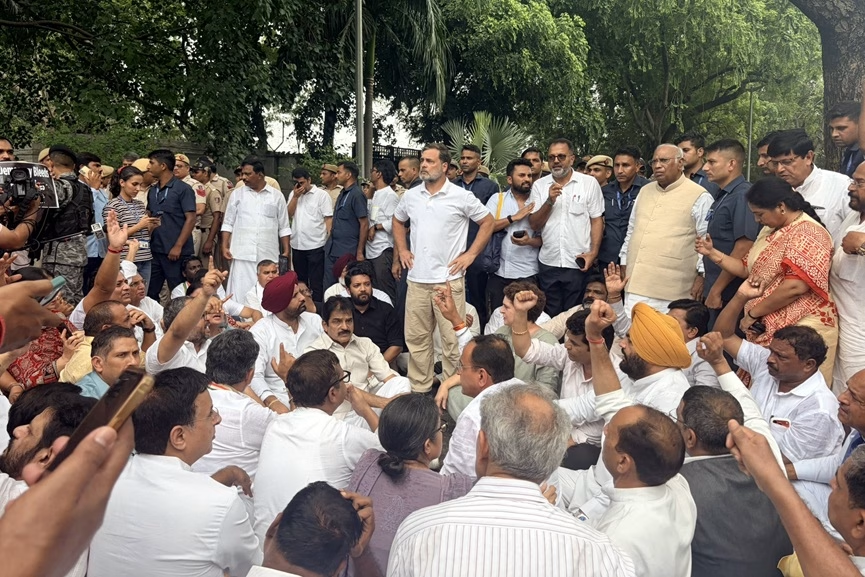
The announcement is the latest in a series of measures unveiled by the government following nationwide outrage over the NEET paper leak and the police action against student protesters in New Delhi.
The protests turned violent after clashes between demonstrators and the Delhi Police, leaving several protesters and police personnel injured.
Earlier this week, the Prime Minister announced the setting up of fast-track courts to speed up trials in paper leak cases and directed authorities to take strict action against those involved. PM had also assured students that the government would continue introducing measures to safeguard the integrity of examinations and ensure accountability.