
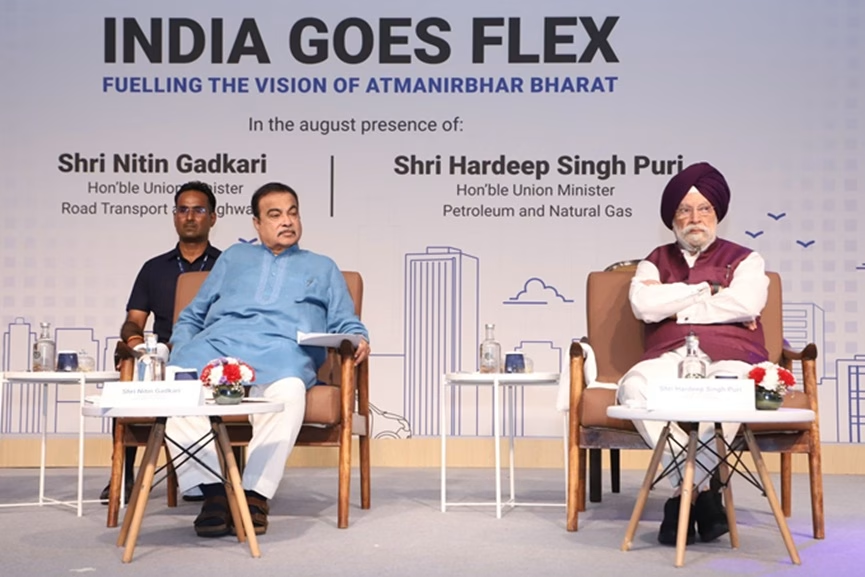
New Delhi: India is set to significantly expand its ethanol-based fuel infrastructure, with plans to establish 500 ethanol dispensing stations across the country by the end of 2026, according to Union Petroleum and Natural Gas Minister Hardeep Singh Puri.
The initiative forms part of the government’s broader strategy to strengthen energy security, reduce dependence on imported fossil fuels, and accelerate the transition to cleaner transportation.
The announcement was made during the unveiling of India’s first flex-fuel passenger vehicle by Maruti Suzuki India, attended by Puri and Union Road Transport and Highways Minister Nitin Gadkari.
Speaking at the event, Puri said the rollout would begin with approximately 50 to 100 ethanol dispensing stations in key urban centers, including Delhi-NCR, Pune, Mumbai, and Nagpur.
These initial facilities will serve as the foundation for a nationwide network expected to grow to 500 stations by late 2026. Looking further ahead, he projected that India could have more than 5,000 ethanol fuel stations by 2027.
India Goes Flex!
माननीय प्रधानमंत्री श्री @narendramodi जी के नेतृत्व में भारत की आत्मनिर्भरता और हरित ऊर्जा की यात्रा में एक और ऐतिहासिक क़दम!
India’s energy sector rolls into the future!
आज केंद्रीय मंत्रिमंडल में अपने वरिष्ठ सहयोगी श्री @nitin_gadkari जी के साथ E20 से E100 तक… pic.twitter.com/Yp56isPyqh— Hardeep Singh Puri (@HardeepSPuri) June 4, 2026
Reducing Import Dependence
The minister emphasized that widespread adoption of E100-compatible vehicles could substantially reduce India’s annual fossil fuel import bill, currently estimated at around $120 billion.
To support the transition, the government is developing a comprehensive ecosystem that includes pricing incentives, road tax concessions, E85 testing fuel, dedicated identifiers for flex-fuel vehicles and outlets, consumer awareness initiatives, and expanded storage and dispensing infrastructure.
“This is not merely a transition in fuel, but the creation of a complete ecosystem for cleaner mobility, stronger energy security, and greater self-reliance,” Puri said.
Boost for Farmers and Ethanol Economy
Highlighting the economic benefits of flex-fuel technology, Puri pointed to the recent launch of flex-fuel motorcycles by Hero MotoCorp.
He noted that if half of all newly sold two-wheelers and passenger vehicles become flex-fuel compliant, India could generate demand for an additional 311.8 crore liters of ethanol while creating nearly ₹12,403 crore in extra income for farmers.
According to the minister, India’s ethanol blending program has already achieved significant progress. Ethanol blending in petrol has increased from 1.5 percent in 2014 to 20 percent today. This expansion has helped save approximately ₹1.84 lakh crore in foreign exchange and reduced crude oil imports by substituting 302 lakh metric tonnes of crude oil.
Yesterday we launched @HeroMotoCorp’s Splendor+ and HF Deluxe Flex Fuel motorcycles, today Wagon-R Flex joined the unprecedented journey.
These launches will provide momentum to India’s Aatmanirbhar Ethanol blending quest, which stood at a mere 1.5% in 2014, reached the milestone… pic.twitter.com/iyXeVl2U2u— Hardeep Singh Puri (@HardeepSPuri) June 4, 2026
Passenger Vehicles Key to Next Growth Phase
Puri described the entry of flex-fuel technology into the passenger vehicle segment as a major milestone in India’s clean-energy transition. With nearly 37 lakh passenger vehicles operating in the country, large-scale adoption of flex-fuel cars could significantly amplify the impact of ethanol-powered mobility.
He also noted that India has developed the capability to produce ethanol from a diverse range of feedstocks, including broken grains, agricultural residues, bamboo, and seaweed. The success of the program, he said, reflects coordinated efforts among farmers, ethanol producers, oil marketing companies, automobile manufacturers, scientists, and financial institutions.
Regulatory Changes Under Consideration
To further support alternative fuels, the Ministry of Road Transport and Highways has proposed amendments to the Central Motor Vehicles Rules, 1989.
The draft changes would permit higher ethanol blends and alternative fuels, enabling the wider adoption of flex-fuel and pure biofuel vehicles across multiple categories.
The proposed regulations cover fuels such as E85, E100 ethanol, B100 biodiesel, and hydrogen-CNG blends, paving the way for a more diversified and sustainable transportation fuel landscape in India.